
Anyone who has worked in plumbing or sewer systems has dealt with the frustration of root intrusion. It’s one of those recurring problems that can create havoc on systems. When left unchecked, it leads to even bigger problems — clogs, leaks, and the potential collapse of the system.
Tree roots naturally seek moisture and nutrients to support growth. Sewer and drain systems provide an ideal environment, as they often carry nutrient-rich water and have conditions conducive to root growth. Cracks, joints, and aging pipes are common entry points, allowing roots to infiltrate and expand within the system. Over time, this growth can obstruct flow, damage pipe walls, and increase the risk of backups and overflows. What begins as a slow, almost invisible issue can quickly escalate into a full-blown nightmare.
In the worst-case scenario, these roots can lead to major system failures that require costly repairs. Gaining insight into the mechanisms and applications of chemical root control is crucial for preserving system functionality and preventing disruptions.
Mechanical vs. Chemical Root Control
Traditional mechanical methods, such as cutting and jetting, effectively clear immediate obstructions caused by roots. However, they often leave root fragments behind, allowing regrowth to occur rapidly. Mechanical methods effectively clear obstructions but often leave the underlying issue unaddressed: the roots' ability to regrow. While these methods are essential for immediate relief, they should be complemented by chemical root control for maximum effectiveness.
Chemical root control targets the roots biologically and chemically, offering a proactive, longer-lasting solution. Used in tandem, mechanical and chemical methods can address both immediate blockages and long-term prevention, ensuring a comprehensive approach to managing root intrusion.
How Chemical Root Control Works
Chemical root control solutions, such as copper sulfate or metam-sodium, are designed to effectively target invasive roots while causing minimal harm to the surrounding environment. These chemicals are classified as contact herbicides, meaning they act directly on the root mass they come into contact with, killing the roots without affecting the surrounding vegetation.
Copper sulfate crystals, which have the longest history of use, are composed of sulfur and copper. These crystals are effective against roots and algae, fungi, and bacteria that may be present in the system. When introduced into the pipes, copper sulfate dissolves slowly, gradually killing the roots over several weeks. While it effectively targets the roots, copper sulfate also minimizes damage to nearby plants by allowing it to break down gradually without harming surrounding vegetation.
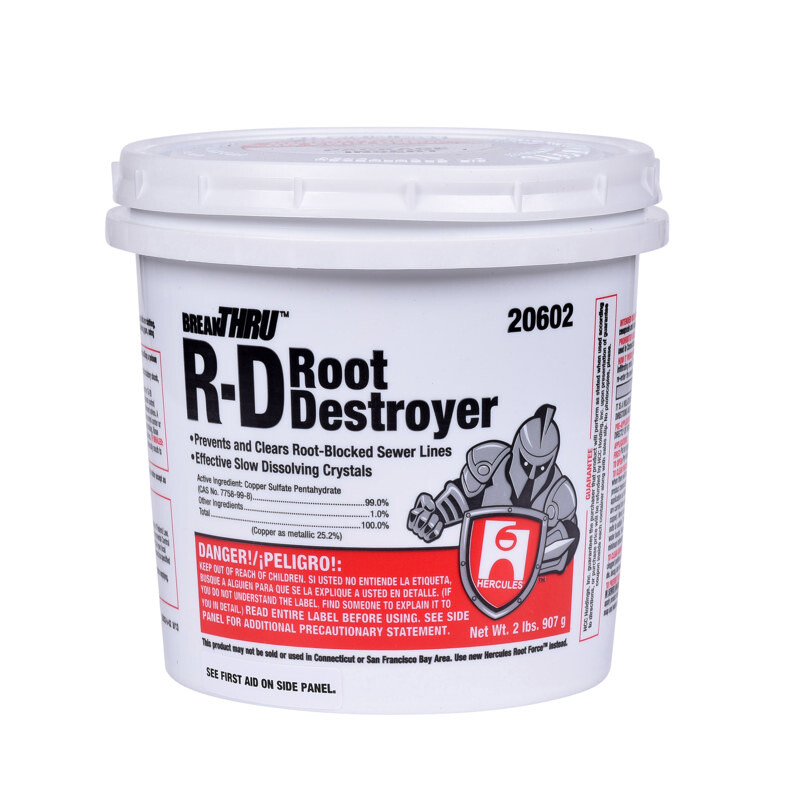
For example, Hercules R-D Root Destroyer uses a non-acidic, non-caustic herbicide in a special flake-like formula to prevent and halt root growth in external drainlines. It does not harm trees, shrubs, or other vegetation and is especially effective in preventing root damage to sump pumps and ejector pumps. In addition, it helps to reduce motor overload caused by roots restricting flow, ensuring that pumping systems remain functional without interference from root growth.
Another commonly used chemical for root control is metam-sodium, which is often used in foaming chemical formulations. Metam-sodium creates a foam that coats the interior of pipes, providing a thorough and even application that ensures all affected areas are treated. This foam expands within the pipes, reaching every nook and cranny where roots may be present. The foam is designed to break down over time, ensuring that dead roots wash away naturally as water flows through the system.
Chemical root control provides an effective long-term solution by addressing the root cause of the problem — literally. The chemicals kill the root mass, preventing it from regrowing and reducing the risk of recurring blockages.
How to Get the Best Results
While chemical root control offers many benefits, its effectiveness depends on proper application. Professionals must consider several factors.
- Pipe condition: Severely damaged pipes may require repairs before chemical treatments can be effective. Chemicals cannot restore structural integrity but are effective at maintaining the functionality of intact systems.
- Timing: Applying the chemicals during periods of active root growth — typically in the spring and early summer — is ideal, as roots are actively seeking water and nutrients at this time. Additionally, treatments should be applied during times of low water flow, such as at night or during off-peak hours. This allows the chemicals to remain in contact with the roots longer, increasing their effectiveness.
- Follow manufacturer instructions: Each chemical product has specific dosage, dilution, and application instructions. Adhering to these guidelines is essential for achieving the desired results.
- Compliance with regulations: Local and regional regulations may govern the use of chemical root control agents. Professionals must ensure compliance to avoid environmental or legal issues.
- Compatibility with other maintenance methods: Combining mechanical cutting to clear severe blockages with chemical treatments can offer a comprehensive solution. The mechanical method addresses immediate concerns, while the chemical method prevents recurrence.
Common Misconceptions About Chemical Root Control
Several myths surrounding chemical root control may make professionals hesitate to recommend it. Let's address a few of the most common misconceptions:
“It's harmful to the environment.” Modern chemical root control products are formulated to be environmentally friendly. These chemicals are designed to target only the roots inside the pipes, leaving surrounding vegetation unharmed. Additionally, they break down quickly in the environment, minimizing any long-term impact.
“It's just a temporary fix.” While mechanical methods like root cutting provide short-term relief, chemical root control prevents future regrowth, making it an effective long-term solution. Unlike cutting, which only removes visible roots, chemical treatments target the root system to inhibit further growth, ensuring long-term protection.
“It's difficult to apply.” With the advent of foaming chemical application systems, chemical root control is easier to apply than ever. These systems are designed to distribute the chemicals evenly and efficiently, often requiring less labor than traditional mechanical root removal methods.
“It works immediately.” Chemical root control isn’t an instant fix. It takes time — sometimes weeks — for the chemicals to kill the root masses, so mechanical methods may still be required initially. Once applied, however, the chemicals will gradually break down the roots, reducing the risk of future blockages.
“It's a one-and-done solution.” Like all forms of maintenance, chemical root control requires regular monitoring and occasional reapplication to remain effective. Consistent treatments help ensure that the system remains free from root intrusion and that future problems are avoided before they escalate.
How Do You Know It's Working?
Once applied, chemical root control doesn’t simply eliminate roots overnight. The application is considered effective when root masses within the pipe cease to grow, weaken, and eventually decay. Contractors can confirm results by observing these signs:
- Improvements in water flow within treated pipes.
- Reduction in complaints or backup incidents over time.
- Visual confirmation of root die-off via sewer inspection cameras.
Chemical root control is a powerful tool for drain and sewer maintenance professionals in the battle against invasive roots. By understanding the science behind these treatments and applying them effectively, contractors and managers can protect infrastructure, reduce maintenance costs, and ensure the reliability of sewer systems.
As technology and research advance, chemical root control will remain a cornerstone of proactive and sustainable system management.
About the Author
Sean Comerford is applications manager at Oatey. He is a third-generation tradesman with nearly 20 years of plumbing experience, including serving as the lead plumber for commercial/residential new-construction, service and fire protection jobs.
Continue reading for free