By the time this article rolls off the presses, it will have been three months since we celebrated World Plumbing Day (March 11) and World Water Day (March 22). These two days bring us a moment to reflect on the importance of what so many people take for granted, which is, of course, safe plumbing and potable water.
Both days always draw me back to the basics of what you and I do for living. We don’t just turn wrenches, we change lives.
As you might recall from my last article, “Addressing America’s Dirty Secrets,” I wrote about the fact that over 2.2 million U.S. citizens live without safe water and sanitation. Now remember, that’s here in the United States alone and doesn’t include the other two billion-plus people across the globe who are currently in the same situation.
In that article I also reflected on a few of the unique plumbing projects I’ve had an opportunity to work on over the years with the International Water, Sanitation, and Hygiene Foundation and how we’ve “chipped” away at the staggering number of U.S. citizens that still live without safe water and sanitation.
This month, I want to tell you about a project that IWSH became involved with just before the COVID pandemic broke out and then re-established again in 2022. I also want you to Google “Lowndes County, Alabama” and read for yourselves a few of the incredible stories about the horrific conditions some of the residents there are currently living with. I say this to you because if someone wouldn’t have told me to do it, I would have never known about this part of America’s Dirty Secret.
Lowndes County is in the central part of the U.S. and one of 67 counties in Alabama. As of the 2020 census, the county’s population was 10,311. More than 40% of this county lacks access to clean sanitation. I’m not a big fan of flashing percentages and statistics when it comes to things like living without access to clean sanitation, so let’s say it like it is, we’re talking about 4,125 men, women and children here. Kind of smacks you in the face and makes it sting a little more when you think about it like that, doesn’t it?
Back in 2019, my IWSH team and I were connected with an organization by the name of the Black Belt Unincorporated Wastewater Program. We were asked if we could visit Lowndes and determine how we might be able to help
with the situation.
When we arrived, we met with BBUWP staff as well as staff from the University of South Alabama, members from The Lixil Group and other local officials. Together we toured various homes throughout Lowndes County and observed firsthand the crisis which was happening there. Every rural home we visited was experiencing the exact same thing, septic system failure.
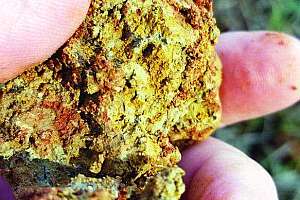
The high rate of failures can be attributed mostly due to the soil type. They have thick brownish loamy sand A and E horizons over strong brown sandy clay loam Bt horizons that are underlain by a lower sequence of a strong brown loamy sand B/E horizon and strong brown sandy clay loam and sandy clay Bt horizons.
Another fact that needs to be mentioned is that Lowndes County experiences a poverty rate of approximately 22.4% (2,320 people). Now add to that, an engineered septic system is going to range from $10K to $30K. Individuals not living in poverty would struggle with taking on a debt of that size much less someone who is simply struggling to
make ends meet.
Put yourself in those shoes for a moment if you will. What would you do? Good question, right? The folks living there wanted to do things right. They wanted safe septic systems installed. We visited with families that hired “contractors” who claimed to be qualified septic systems installers. These families were literally scammed out of thousands of dollars by individuals that simply dug a hole in the resident’s backyards, installed a burial casket tomb for septic tanks, (yes, you read that right, burial casket tombs) charged them thousands, and left them with even bigger headaches.
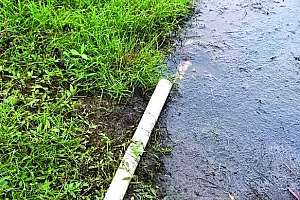
In more cases than I care to mention, the simple fix for most of these homeowners was to install “straight-pipe” systems. These systems were exactly that, a pipe that was connected to the home’s building drain and piped straight to the ground surface. Yes, on top of the ground! It was hard to witness this but yet, easy to understand in that, sometimes, you have to do what you need to do, in order to survive.
With that being said however, you can only imagine the health risks this type of system opens up. Untreated sewage can lead to bacterial infections and intestinal parasites. It was unnerving visiting these homes and seeing this in real life. We were not off in some Third World country. We were right here in the United States.
It didn’t take long for our group to decide that we needed to come together and find a way to help the residents of Lowndes County. In March of 2022, we did just that. We implemented a plan and began carrying it out. In my next article, I’ll explain more about what we did together last year and how our next trip this month has exemplified the fact that plumbing is more than turning wrenches, it truly is about changing lives for the better!