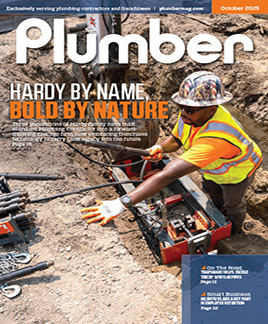
I’ll be honest — I love Jim Sloup’s line: “Guys just like to dig.” It’s featured in this issue’s profile on Burton A/C Heating Plumbing & More.
The comment from Jim captures the spirit of your trade perfectly. Most of you got into plumbing because you like working with your hands, solving problems, and seeing immediate results. There’s nothing like the satisfaction of opening up the ground, running pipe, and putting something solid in place.
But as I think about Burton A/C Heating Plumbing & More and the work they’re doing in Omaha, Nebraska, I’m reminded that digging or pipe repair alone doesn’t make a great plumber. What takes a crew — and an entire company — to the next level is discipline. That means slowing down, documenting every step, and keeping a clear record of what was done and why.
GET INTO THE HABIT
Now, I know “documentation” doesn’t light up the same way a shiny new tool or a powerful excavator does. It feels tedious. It feels like paperwork. But here’s the truth: it’s just as important as turning a wrench. For Burton, documentation isn’t optional. On Omaha’s lead service line replacement project, crews must photograph every step — from the old lead line at the curb stop to the new copper at the water main — and log it all according to EPA guidelines. Without that paper trail, the job isn’t complete.
And isn’t that true in almost every aspect of plumbing? If you don’t document, you leave yourself exposed. You risk callbacks. You make it harder for the next tech who comes in. And maybe most important, you shortchange your customer by not giving them the full story of their system.
A couple simple habits can make documentation less of a burden and more of a natural part of your process:
Take photos early and often. We all carry cameras in our pockets now. Use them. Snap the “before,” the “during,” and the “after.” You’ll thank yourself when a customer has a question or when you need to show proof of what’s underground.
Write it like someone else will read it. Because they will. Whether it’s another tech, a utility inspector, or even your future self, your notes should be clear enough that someone who wasn’t on the job can follow the trail.
IT BENEFITS YOUR COMPANY
Those little things add up. Burton didn’t suddenly land a municipal infrastructure contract because they could dig a trench. They earned it because they built a reputation for thoroughness — for going beyond the obvious fix, documenting what they did, and communicating clearly with every customer. That’s what made them the kind of company a utility could trust with a generational project.
So the next time you’re tempted to rush through the paperwork, remember this: digging and repairs may get the pipe in the ground, but documentation is what keeps your work standing strong tomorrow. It’s what protects you, serves your customer, and in the long run, sets you apart as a professional.
Because in plumbing, as in life, the real difference comes from how deep you’re willing to go.
Enjoy this issue!
Continue reading for free