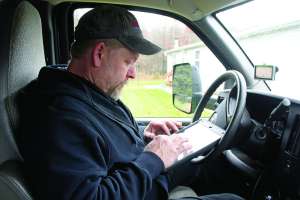

There was a time when the work van was little more than a rolling storage unit — stocked with fittings, tools and maybe a clipboard riding shotgun. Today, that same space has the potential to be something far more powerful: a mobile command center that strengthens communication, builds trust and elevates the entire customer experience.
Across the plumbing industry, contractors are rethinking how technology fits into the day-to-day rhythm of service work. Not as a replacement for skill or personal interaction, but as a way to enhance it.
With the right mix of tablets, software and emerging AI tools, plumbers can walk into every job more prepared, more informed and more connected than ever before, all before they even knock on the door.
STARTING WITH THE TABLET
For many shops, the shift begins with a tablet. Mounted in the van or carried to the job site, tablets have become the digital backbone of field operations. They replace paper invoices, handwritten notes and back-and-forth phone calls with real-time access to everything a technician needs.
Work orders, customer history, equipment specs and even past photos are all available in seconds. That means a plumber can review previous service calls while parked outside, understand recurring issues and walk in already informed. From the customer’s perspective, that level of preparedness immediately builds confidence.
Tablets also create opportunities for clearer communication. Instead of trying to explain a repair verbally, technicians can show diagrams, photos or short videos that help customers understand what’s happening. It turns a potentially confusing situation into a transparent conversation — and that transparency often leads to better decision-making and fewer surprises.
BRINGING THE OFFICE INTO THE VAN
Connected software platforms take things a step further by linking the field directly with the office. Scheduling updates, dispatch notes and customer messages flow instantly, eliminating delays and miscommunication.
If a job runs long or a part needs to be ordered, the technician doesn’t have to step away to make multiple calls. Updates can be sent in real time, keeping both the office and the customer informed. That level of responsiveness matters, especially in an era where homeowners expect the same level of communication they get from other service industries.
It also allows for smoother handoffs. When a plumber finishes a job, invoices can be generated and shared on the spot. Customers can review the work, ask questions and even sign off digitally before the technician leaves the driveway. The result is a cleaner, more professional close to every service call.
SUPPORTING WORKERS USING AI
Artificial intelligence is starting to make its way into the trades, and while it may sound like a leap, its most practical uses are surprisingly straightforward.
In the van, AI-powered tools can help technicians troubleshoot issues faster by analyzing symptoms and suggesting possible causes based on similar service histories. Instead of relying solely on memory or manuals, plumbers have an additional layer of insight at their fingertips.
AI can also assist with communication. Technicians can use voice-to-text tools to document notes quickly, or generate clear, customer-friendly summaries of the work performed. That’s especially useful at the end of a long day when documentation can feel like an afterthought.
Some platforms are even beginning to offer real-time coaching prompts — reminders to suggest maintenance options, explain warranties or offer additional services based on the job at hand. Used correctly, these tools don’t replace the technician’s judgment, but they do help ensure that important details don’t get overlooked.
USING VISUALS TO BUILD TRUST
One of the most effective ways to connect with customers is by showing, not just telling. With tablets and mobile apps, plumbers can take before-and-after photos or short videos directly from the job site and share them instantly.
A clogged drain, a worn-out water heater or a hidden leak behind a wall becomes much easier to understand when the customer can actually see it. That visual proof removes doubt and reinforces the value of the work being done.
It also creates a record that can be referenced later. Customers appreciate having documentation, and it positions the contractor as organized and professional. Over time, those small touches add up to stronger relationships and repeat business.
STAYING HUMAN IN A DIGITAL WORLD
With all this technology in play, it’s easy to assume the experience could feel less personal. In reality, the opposite is true — when used correctly, these tools free up technicians to focus more on the human side of the job.
Less time spent digging through paperwork or making calls means more time spent talking with the customer, answering questions and explaining options. Technology handles the background work, allowing plumbers to be more present in the moment.
A tablet might display the information, and AI might help organize it, but it’s still the technician who delivers the experience. Eye contact, clear communication and respect for the customer’s home remain the foundation.
BUILDING A SMARTER VAN, ONE JOB AT A TIME
For shops looking to get started, the key is not to overcomplicate the process. Introducing tablets and basic field service software is often the first and most impactful step. From there, additional tools — photo documentation, digital payments, AI-assisted features — can be layered in over time.
Training is just as important as the technology itself. Technicians need to feel comfortable and confident using these tools, not burdened by them. When the system works smoothly, it becomes second-nature — just another part of the job.
And in an industry built on trust, anything that helps plumbers connect more clearly, respond more quickly and serve customers more effectively is an advantage.
Continue reading for free