
Homeowners expect plumbing systems being installed today to last for decades.
But if the past is any indication, the chemical composition of the water flowing through those pipes can change regularly — and possibly dramatically — over those decades. For some plumbing materials, those changes could be catastrophic.
The evolution of drinking water chemistry
The United States started using free chlorine to kill bacteria and keep drinking water safe about 100 years ago. That ultimately resulted in the robust water treatment infrastructure that today serves about 88% of U.S. residents.
Free chlorine is a fast-acting and mostly effective disinfectant. But toward the end of the 20th century, scientists discovered that it could interact with certain water contaminants to create byproducts that may be more harmful than the bacteria it was intended to kill.
That led some water utilities to replace free chlorine with chloramine, a mixture of chlorine and ammonia. Chloramines create fewer byproducts but are slower acting than free chlorine. This disinfectant also proved to be aggressive to copper pipes, resulting in high failure rates in copper pipes where chloramine disinfection was adopted. Of course, the plumbers who installed those pipes had no way of knowing that municipalities would one day convert to a disinfectant that was harmful to the pipes they were installing.
Researchers, the EPA and water utilities continued to seek out a disinfectant that could combine the best attributes of chlorine and chloramines. In recent years, they have turned their attention to chlorine dioxide, which acts fast like chlorine and is long-lasting like chloramines. Chlorine dioxide is not known to create harmful byproducts and has minimal impact on water taste and odor.
Implementing chlorine dioxide disinfection in water treatment facilities requires more time and investment than converting from chlorine to chloramines so adoption is expected to grow gradually but steadily. According to data from the EPA, use of the disinfectant in municipal water systems has increased at least 94% since 2020.
Preparing for chlorine dioxide
Chlorine-based disinfects can degrade polyolefin materials like polybutylene, polypropylene, PERT and PEX. According to Technical Note 53 from the Plastics Pipe Institute, conditions that can impact PEX’s ability to resist chlorine degradation include:
- Temperatures above 140 degrees F
- Water pressures above 80 psi
- An Oxidation Reduction Potential (ORP) above 825 mV.
ORP is the wild card among these limitations as it is outside the control of builders, engineers and plumbing contractors. Water treatment professionals attempt to control the ORP of the water supply through the types and concentrations of disinfectants used and a higher ORP means less biological contamination. ORP is constantly changing and levels that exceed certain materials’ ability to resist chlorine degradation can be easily achieved.
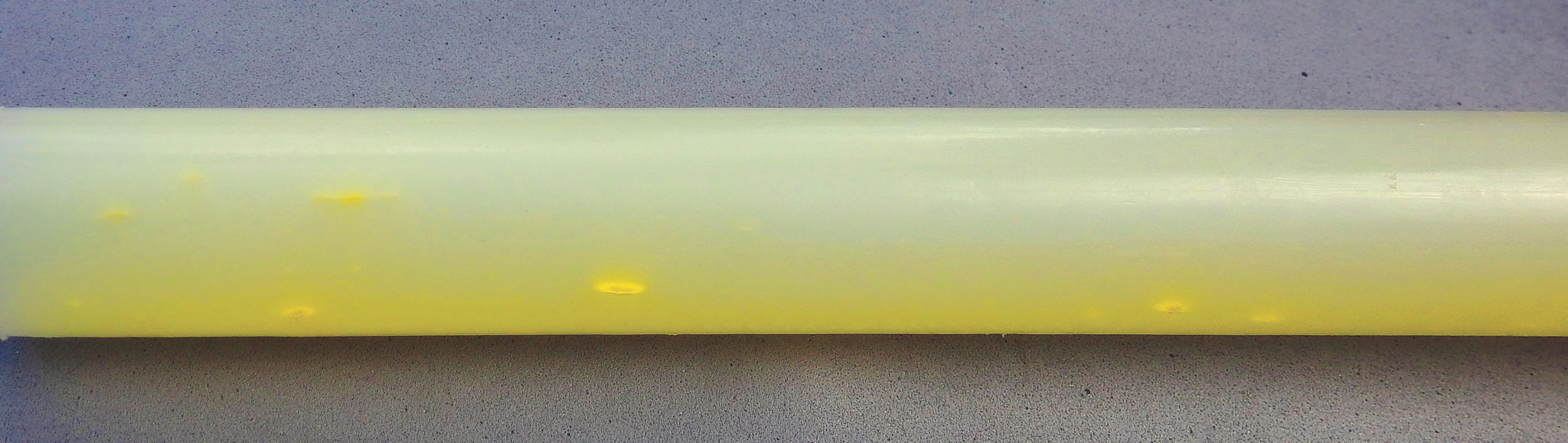
Chlorine dioxide is even more aggressive to materials like PERT and PEX than free chlorine. According to International Dioxide, chlorine dioxide has 2.6 times more ORP than free chlorine. In 2024, the Plastics Pipe Institute released Technical Note 67, which analyzed available research on the effect of chlorine dioxide disinfection on various plumbing materials. According to this Technical Note, “the published results indicate that chlorine dioxide has the potential to reduce the service life of most plumbing distribution materials.” The one exception noted is CPVC: “Chlorine dioxide is not known to be aggressive to CPVC at elevated temperatures of 200 degrees F (93 degrees C) and below.”
With chlorine dioxide disinfection growing, multiple PEX manufacturers have added statements in their installation guides recommending against the use of their products “as part of any potable-water distribution system in buildings where chlorine dioxide is used for secondary disinfection.”
Plastics Pipe Institute’s TN-53 technical note offers additional guidance: “Frequent or continuous exposure to water conditions beyond those used in ASTM Test Method F2023 (i.e., aggressive water quality with an ORP above 825 mV and/or pressures above 80 psig and/or temperatures above 140 degrees F) may cause premature oxidation and eventual brittleness of the PEX material, reducing its ability to meet long-term requirements. Conversely, infrequent or sporadic exposure to such operating conditions may have little effect on PEX pipe or tubing, with regard to its anticipated lifetime.”
But again, as with chloramines and copper, plumbers have no control over the changes water utilities make after pipes are installed.
One way to protect the pipes being installed today from premature failure due to chlorine dioxide is to use materials that are immune to degradation from chlorine-based disinfectants in drinking water. For example, FlowGuard Gold CPVC. As a chlorinated compound, CPVC is immune to damage from chlorine-based disinfectants in drinking water, including free chlorine, chloramines and chlorine dioxide.
Preparing for emerging water treatment methods
Chlorine-based disinfection is a fact of life in U.S. water treatment and we are now seeing signs that more water utilities will adopt chlorine dioxide disinfection in the coming years. This has the potential to reduce the service life of plumbing materials that are incompatible with drinking water disinfected with chlorine dioxide.
Plumbers can’t control water disinfectants or accurately predict how they will change after pipes are installed. But today we have the knowledge that chlorine dioxide can reduce the service life of certain materials and use of chlorine dioxide disinfection is on the rise. Plumbers can ensure the materials they install are resistant to chlorine, chloramine and chlorine dioxide disinfectants. For more information, visit flowguardgold.com.
Jonathan Simon is the North American residential plumbing manager for Lubrizol Advanced Materials Inc., the parent company for FlowGuard Gold Pipe and Fittings.
Continue reading for free