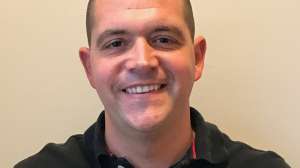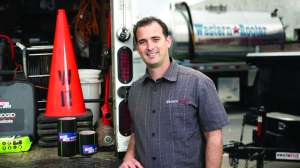

When Brent D. Hershey talks about plumbing and onsite wastewater, he does not start with trucks, tools or even technology. He starts with vision. “Our objective is to clean the world’s water,” he says. “We do that by providing water and wastewater treatment solutions here in Pennsylvania and Maryland.”
From a compact base in Parkesburg, Pennsylvania, Tri-County Water Services has grown from a small family plumbing and water conditioning shop into a multiservice company focused on plumbing, water treatment and onsite septic and wastewater maintenance across southeastern Pennsylvania including Chester, Lancaster, Berks and Delaware counties. Along the way, Hershey has built something most contractors talk about, but struggle to achieve: a true recurring-revenue model built on long-term service agreements for both water treatment and wastewater systems.
FAMILY BUSINESS ROOTS
Tri-County’s story starts with Hershey’s father, a farm kid who worked his way through quarry work and diesel mechanics before moving into water treatment in Wilmington, Delaware. That path eventually led him to RainSoft, a national water conditioning brand, and then, in the late 1990s, to strike out on his own with a new plumbing and water conditioning company: Tri-County Water Services.
Hershey grew up in that world. “I always joke that I was raised holding a pipe wrench,” he says. He worked in the business in high school and right after, then did something many second-generation tradespeople never do: he left. He went into banking and corporate finance, studied financial management in college and got a taste of “wearing a suit,” sales and corporate life. That step away turned out to be pivotal.
“Somebody along my journey encouraged me to step out and away from the family business for a while,” he recalls. “I’m glad I accidentally listened to that. I probably learned as much stepping away as I did in college.” Armed with both field and financial experience, Hershey returned to Tri-County full time in 2007. He bought into the company in 2011 and acquired the remaining shares in 2018, becoming sole owner.
Today he is one of 13 on the team. Twelve employees fill roles that range from field technicians and a soil scientist who designs septic systems, to an office team that includes a service manager, account manager and bookkeeper. Hershey still wears the finance and marketing hats, although he is actively working on offloading at least the finance role in the next couple of years.

SERVICE, NOT NEW CONSTRUCTION
One of the first strategic decisions Hershey made was what Tri-County would not be. “I am not a new-construction plumber,” he says. “It has been since 2008 that we chose not to get involved with new construction.”
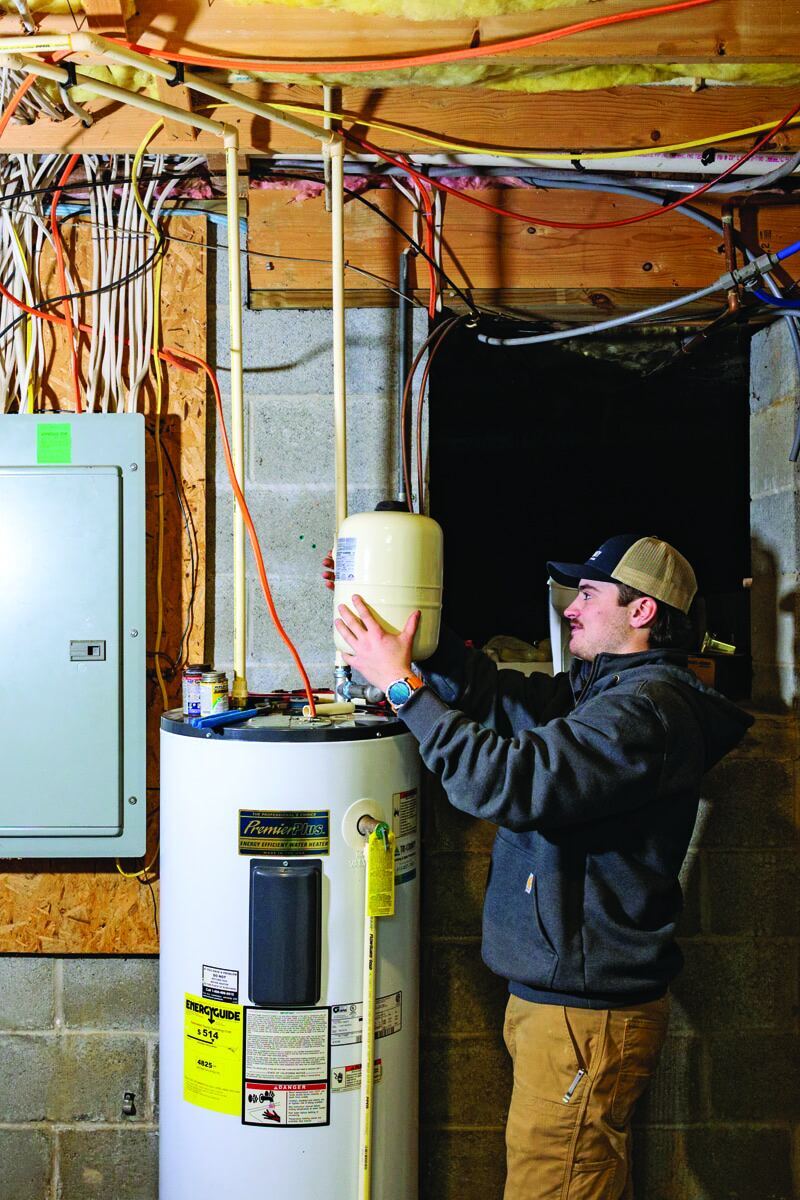
Instead, Tri-County is entirely service-oriented. On the plumbing side, that means: water heaters, well pumps and pressure tanks, leak repairs and general service, sump pumps and main water supply work, toilets, tubs/showers, sinks and pipe repairs. Most of that work is for homes and small businesses. Hershey intentionally avoids prevailing-wage commercial contracts and large institutional work where permit timelines and red tape can dominate the schedule.
On the onsite wastewater side, Tri-County services proprietary residential and small commercial systems: drip irrigation systems, aeration units, packed-bed filters, sand filters, chlorinators, ultraviolet disinfection and similar technologies. Many of these systems serve single homes, small businesses or “small flow treatment facilities” that discharge to streams or the surface.
“There is a whole pile of drip irrigation, aeration equipment, packed bed filters, sand filters, chlorinators, UV systems out there,” Hershey says. “They are often tough to find good service providers for, challenging to find people that know that technology, maybe even have, let alone stock, a few parts.”
Tri-County operates deliberately below the 2,000 gpd threshold that would require licensed operators in Pennsylvania. The company gains manufacturer training on the specialized equipment, sends technicians to vendor courses and maintains a growing base of these installations in Pennsylvania and Maryland.

FINDING A NICHE
The seed for Tri-County’s service-agreement model came from a manufacturer relationship. A regional representative for Orenco Systems was selling AdvanTex treatment systems for residential and commercial properties. The rep did not want to do long-term service, so he started handing customers Hershey’s number. “I ended up with about 35 homes under contract,” Hershey says.
Around the same time, he was wrestling with the same problem many contractors face: cash flow swings and payroll pressure. “We would squeak out a little profitability at the end of the year, but cash flow just got eaten alive through payroll,” he says. “Every two weeks, that payroll hit. I started thinking about what we could do to put something in place.”
Watching HVAC contractors sell maintenance contracts on every changeout and knowing one of his plumbing competitors offered a plumbing inspection program, he recognized a pattern. The breakthrough came when the Orenco rep approached him about taking over the Pennsylvania distributorship. “Everyone I sell, I can get a maintenance contract,” Hershey remembers thinking.
Then a friend with a septic design company asked if he wanted to buy that business as well. Same logic: Every design represented another opportunity to offer a maintenance contract on the systems being installed. Hershey acquired both the Orenco distributorship and the design consulting company. From there, he pulled his team together.
“I brought them all in and said, ‘This is what I would like to do, what do you think?’” he says. With input from the field and office, Tri-County built a service-agreement model that fit the company and its customers.
The wastewater contracts grew from approximately 35 to about 400. On the water treatment side, Tri-County now has around 400 to 450 maintenance agreements, with a long-term goal of 3,000 water treatment agreements and 3,000 wastewater/septic agreements in the next decade. “That is our first goal as a company,” Hershey says. “It takes the ebbs and flows out of cash flow. It gives us work year-round that is not weather-driven or permit-driven.”
On the water treatment side, many agreements are more standardized. Systems such as softeners, acid neutralizers, reverse osmosis, carbon and sediment filters and UV systems are combined into annual packages that include routine inspection, media replacement and testing. On the wastewater side, particularly for small flow treatment facilities that have permit-specific sampling and reporting requirements, agreements are more customized. Templates exist for common technologies like aeration units and chlorinators, but the company layers in any municipality or Department of Environmental Protection obligations.
An account manager oversees the entire contract portfolio, tracking obligations and ensuring Tri-County fulfills each requirement on schedule. The result: While the contracts are not easy to sell initially, retention is extremely high. “They are hard to get, but once you get them, I do not know that we have really lost anybody yet, short of moving and not being able to contact the new owner,” Hershey says.

STAYING IN THEIR LANE
To deliver both plumbing and onsite wastewater services efficiently, Tri-County has trained its technicians to handle both sides of the house. They might spend one hour replacing a water heater or well pump and the next maintaining a drip irrigation field or small packaged treatment system. All of that happens without crossing into large-plant operator territory. That is by design.
A friend who employs several licensed operators reminded Hershey how different a half-million gpd treatment plant is from a 1,500-gallon system. “They are not the same thing,” Hershey says. The larger plants also require a different level of on-call commitment than he does not want for his team. “My guys are family guys,” he says. “They like to work hard and provide for their families, but they do not want to be on call every day and every weekend and holiday.” Technicians commit to one week of on-call per month, and the company works to protect their family time outside that commitment.
Tri-County similarly stays disciplined with equipment and project scope. The company keeps all trucks and trailers under 26,000 pounds, which allows technicians to operate without commercial CDLs. Excavation work that requires larger equipment or heavier trucking is subcontracted.
For example, Tri-County subs directional drilling and any “under-the-road” work in the street, while remaining the plumbing contractor of record. The company pulls permits, provides materials, digs boring pits when needed and coordinates subs to complete lead service line replacements and similar projects.

REWARDING PROJECTS
Asked which projects he enjoys most, Hershey lights up when he talks about lead service line replacements driven by new federal and state initiatives. “There is a big move to push out lead and galvanized replacements in these old infrastructure areas,” he says.
Tri-County targets neighborhoods where local providers are replacing lead services. The company focuses on the private side, typically 20-foot laterals between curb and home, and stays away from work in the street.
Public sewer connection projects are another profitable area. There, Tri-County abandons old cesspools or septic tanks, dredges a new sewer lateral to the street and reroutes interior plumbing as needed to connect homes to new municipal systems.
But when it comes to sheer satisfaction, nothing beats seeing maintenance agreements hit the scorecard. “Every time I see an estimate win come through our CRM and I see it is a maintenance agreement on water treatment or wastewater septic, it is like a dopamine hit,” he says. To keep that focus front and center, the team tracks agreements weekly and reviews those metrics in a “Level 10” meeting derived from the Entrepreneurial Operating System that Hershey adopted for the business.
VISION AND MISSION
For Hershey, the turning point in building a resilient business was getting serious about vision, mission and core values, then sharing them consistently. Tri-County’s vision is to “clean the world’s water,” and its stated mission is to provide responsible water and wastewater treatment solutions. The company’s core values: grateful, humble, excellent and teachable.
Those words are not just wall art. They are baked into hiring, reviews and daily conversations. “Core values and vision come out of the owner, the leader,” Hershey says. “They cannot be faked. They are where the leader has always been going; they are now just finally put on paper.”
Every quarter, Tri-County holds a “state of the company” meeting. Hershey presents a PowerPoint that shows progress on 10-year, three-year, one-year and quarterly plans. He shares both successes and failures, talks openly about goals and invites feedback.
“When I hire now, I go through all that first, before we even talk about the type of service truck they are going to drive,” he says. “If they are still excited after that, I feel like I have some good people.”
Weekly, the leadership team meets on an EOS-style agenda that includes a scorecard, issues list and to-dos. Core values provide the framework for coaching. “If there is a hiccup in the field, we do not go to the technician and say, ‘Remember more, do better,’” Hershey explains. “We say, ‘One of our core values is excellence, one is being teachable and it seems like you are missing the mark here. What is going on?’”
Often, that reveals a personal issue that the company can support the employee through. Sometimes it exposes a deeper misalignment with teachability or humility. Either way, the core values provide a shared language.
FAITH, FAMILY AND DECISION FILTERS
On the personal side, Hershey credits his faith and time spent studying scripture with reshaping his approach to leadership. Principles like the Golden Rule and stewardship show up throughout the business from how he thinks about water resources to how he structures work for his team.
Tri-County’s environmental ethic is simple: Earth’s usable freshwater is finite, and every gallon that passes through a home or small treatment system matters. “We believe that 1% of water that is left on the earth for us to consume and treat is what we are treating every day,” he says. Treating water on the front end, and wastewater before it returns to the environment, is how the company believes it contributes to that stewardship.
When it comes to big decisions, Hershey runs opportunities through three filters in order: his faith, his wife and his team. “With those three filters in place, we either build a plan, shelf it for later or kill it,” he says. He freely admits he is an “ideas guy” who can generate 20 ideas a week, of which maybe one is worth pursuing. The filters keep the company focused.
LOOKING AHEAD
Tri-County’s growth plans are purposeful rather than flashy. On the septic side, Hershey is evaluating whether to enter pumping. His uncle currently operates a small pumping business out of the same shop, and Tri-County refers a significant number of pumping jobs each year. The company is weighing the pros and cons of buying a truck and building that arm from scratch versus acquiring a small pumping company with an existing route and truck. Either route would require reentering the CDL world and adding another cog to the operational wheel, so timing matters.
Geographically, Hershey is eyeing Florida as a “hotbed” for the kind of advanced onsite treatment systems Tri-County services today. The state has a large installed base of treatment systems and faces increasing regulatory pressure around nutrient loading and onsite performance.
He and his wife plan to spend March 2026 in Florida exploring contacts and opportunities. Any expansion would be in the same plumbing, water treatment and onsite wastewater niche, with a preference for partnering with or acquiring small, like-minded firms that share similar values.
Perhaps the most forward-looking initiative is a new proactive service panel that Tri-County plans to roll out in January 2026. The compact monitoring panel can be installed on sumps, dewatering pumps, effluent pumps, well pumps and treatment system controls. It connects via cellular signal back to Tri-County’s office and tracks electrical draw, runtimes and, when tied into a water meter, flow usage. By watching amperage and run patterns, Tri-County can spot problems like pumps working harder to maintain pressure, sand mound pumps running too long or water treatment equipment stuck in regeneration. On the water side, flow spikes could flag leaks, slab leaks or fixtures left running while owners are away. The panel will be offered on a subscription model, with Tri-County owning and maintaining the equipment and using alerts to send technicians out before minor issues turn into costly failures. “We want to be proactive, not reactive,” Hershey says. “There is a variety of ways we can use this to protect someone’s home or business.”

ADVICE FOR PEERS
Asked what advice he would offer to other plumbers and onsite wastewater contractors trying to stay viable and healthy in a changing market, Hershey does not talk first about gear, software or marketing tactics. He talks about vision and humility. “Companies need a vision,” he says. “Why would somebody want to work there?”
In his view, culture often matters more than the specific trade when it comes to attracting talent. Young people, in particular, are looking for places where people are fulfilled, appreciated and part of something that matters. Hershey is also candid about a trend he watches warily: private equity buying up service companies in plumbing, HVAC and now septic. While he acknowledges some large groups may build strong local cultures, he believes independent contractors will often be better positioned to create authentic, community-rooted workplaces.
Above all, he encourages peers to remain teachable and to avoid trying to do everything alone. “You have to be willing to look outside of yourself for help,” he says. He points to industry associations like state wastewater and septic groups, NOWRA and similar organizations that offer training on succession planning, leadership and business operations. He also cites the Entrepreneurial Operating System “Traction” framework as a practical way to structure meetings, data and long-term planning. “Business owners work in silos,” he says. “They think they have to figure it out on their own, that if they just work harder or sign more deals it will fix things. Unfortunately, you have to put some other cogs in that wheel to make the whole thing go by itself.”
For Tri-County Water Services, those cogs look like clearly defined values, a service-agreement engine, a cross-trained team and a steady commitment to proactive solutions. It is a combination that is helping one small family business in Parkesburg, Pennsylvania, build a cleaner-water future one contract at a time.
Continue reading for free