
In a popular movie of yesteryear — 1967’s The Graduate — the character Benjamin Braddock is assured that the future of everything can be summed up in one word: plastics. Tell that to the authors of the Chicago plumbing code.
More than a half century later and the city’s code still requires copper and cast iron waterlines, rather than PVC, in many Chicagoland buildings. Consequently, plumbers are still having to solder copper joints or thread cast iron pipe to fashion water systems according to code.
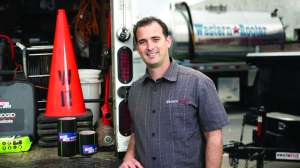
“In anything over three stories in height, PVC isn’t allowed,” explains Rodney M. Hardy, president of the Chicago metro area’s Standard Plumbing Contractor. “We mostly work with copper in that situation. But we do PVC work in residential buildings under three stories.”
Indeed, a glance at the company’s Facebook page of work site photographs shows an impressive array of installed copper and PVC lines.
Copper gets the nod in high-rises because it is durable, being resistant to corrosion, and thus needing replacement less often than pipes fabricated of other material. Copper is also fire resistant, unlike polyvinyl chloride pipes. The material is highly recyclable, as well, so it retains value even at the end of its life cycle.
Consequently, plumbers working in Chicago necessarily have a broader set of skills than in some less urban locations. The skills are learned by tradesmen in one of two settings: in a classroom at a local union hall or in master plumber courses offered by private trade schools. The requirements are the same in either setting. Besides the classwork, the aspiring plumber also must complete a 48-month apprenticeship before testing out in a city-sponsored plumbing exam.
Hardy did all of the above.
“We cover all aspects of plumbing, so I necessarily am a well-rounded plumber," he says. "I can solder and operate the various kinds of equipment and tools we use. I take pride in that.”
Read more about Standard Plumbing Contractor in the October 2025 issue of Plumber magazine.
Continue reading for free