
Analyzing camera footage of pipeline inspections can be tedious for humans, but it is a perfect task for AI-enabled software, which can be trained to spot and report anomalies while humans devote time to other work.
That’s the thinking behind SewerAI’s AutoCode AI. This software’s “Computer Vision AI” uses artificial intelligence to reliably detect, record and report anomalies in pipeline inspection videos.
“Reviewing a single sewer video or larger dataset traditionally takes a certified technician many hours if not days to fully analyze and annotate,” says Matt Rosenthal, CEO and co-founder of SewerAI. “AutoCode accelerates the process up to six times while also receiving consistent, highly accurate results. From complete NASSCO PACP inspections to cross-bore safety audits, our computer vision software is equipped to work for contractors and utilities.”
Rosenthal says AutoCode was born out of his desire “to improve efficiency, to make things that are slow and monotonous less slow and faster.” The specific inspiration for AutoCode occurred when Rosenthal was building a SewerAI application to analyze lidar and sonar data.
“I realized there was another challenge in this space where you had operators watching sewer inspection videos and manually labeling things,” he says. “That’s a slow process that tends to be a bit subjective and very expensive. I was also studying AI at the same time, and put two and two together. There was this opportunity to apply AI technology to the problem of finding defects, doing it at a much lower cost than by using human operators while improving the efficiency of the process. So that is what I did.”
SewerAI’s success in applying AI to sewer inspections, plus its related products, convinced a series of investors led by Innovius Capital to invest $15 million in the company recently.
The benefits of AI
Spotting anomalies in pipe inspection videos is just one benefit delivered by SewerAI’s AutoCode. Labeling and reporting using NASSCO scores, and then assigning a NASSCO rating for the entire pipe, are two more. The videos are uploaded by AutoCode subscribers to SewerAI’s cloud platform.
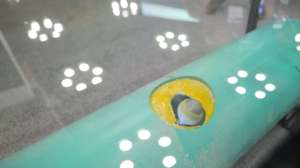
“The AI has been trained to look for any of the NASSCO defect codes that are typically labeled in a sewer inspection video, whether it’s a root, a lateral connection or a broken pipe,” Rosenthal says. “When it finds them, AutoCode will label them in the video as observations. Then SewerAI’s team of trained NASSCO technicians will review those observations and confirm them. After that, a report is generated and sent to the customer, so they can see everything that’s in the video.”
This leads to another benefit of AutoCode: Quick access to the visuals of reported defects.
“If the report says, ‘Hey, there’s a broken void visible in this video,’ and the engineer wants to go look at it quickly, SewerAI provides them with an interface where they can just click on that defect in the report and jump directly to that spot in the video,” Rosenthal says. “You can also look at snapshots on the AutoCode cloud platform. You can look at where these individual defects are on a map of your pipeline system, which you can share with anyone. You can also use the assigned NASSCO codes to decide which repairs need to be done first.”
Yet another benefit of using AutoCode: Because field technicians don’t have to watch the live camera feeds continuously and visually check every defect they see (instead they record the video inspection and submit the video file to AutoCode), these personnel can work much faster.
“Whereas a crew historically was lucky if they could get between 800 and 1,300 feet per day, now they’re able to cover 3,000 to 4,000 feet per day,” Rosenthal says. “This dramatically increases the productivity of operators out in the field, and since their cost to do inspections is fairly fixed, you’re actually decreasing on a per foot cost to collect the data.”
A customer’s perspective
Headquartered in Scottsdale, Arizona with offices throughout the United States, AIMS Companies provides turnkey inspection and cleaning services to the municipal and industrial community. AIMS uses SewerAI’s AutoCode platform, plus the company’s cloud-based PIONEER sewer data management platform.
“I’ve put AutoCode to the test, by running the same pipe inspection videos past human operators,” says Matt Wilkin, AIMS senior vice president of operations. “The accuracy of this software has been proven. Every issue that my human team found, the AutoCode AI team found as well. There was no difference in the results generated by the two.”
Freeing AIMS field teams from having to manually code issues detected during pipe inspections is a big time-saver.
“Based on what my operators in the field are telling me, we’re getting up to an additional line inspected per day,” says Shane Willis, AIMS regional data manager.
Other SewerAI products
AutoCode and PIONEER are just two of SewerAI’s data-driven solutions for sewer workers. For example, the company’s Sewer3D product allows operators to create realistic photo/video-based 3D models of an entire underground infrastructure. These models then serve as “digital twins” to the real things: Whenever changes are made in the actual sewer system, those changes can be added to the digital twin for accurate tracking and predictive maintenance.
Meanwhile, SewerAI’s Quality Assurance for Inspections programs can be used to automatically check an operator’s video pipeline database to ensure NASSCO compliance and look for problems. Available in Basic or Advanced versions, QAI can also verify the accuracy of Survey Headers and validate each operator’s NASSCO credentials.
A bright future
SewerAI is enjoying considerable success.
“We have been doubling our customer base every year for four years in a row,” Rosenthal says. “We’re also seeing incredible usage out in the field, with 150 million feet of pipeline data in our platform. So the future looks bright for SewerAI. I think our clients appreciate the value proposition of us making them more efficient at their jobs.”
Continue reading for free