
If you have been an avid reader of Plumber magazine over the past seven to eight years, then there is a pretty good chance you’ve caught one of my articles about sanitation issues in other countries.
Since 2015, I have had the unique opportunity to travel abroad to countries such as India, South Africa and Indonesia with my team at the International Water, Sanitation and Hygiene Foundation to address these issues. The IWSH Foundation is the philanthropic arm of the International Association of Plumbing and Mechanical Officials.
I’ve seen the lack of sanitation and safe water at its worst. Open defecation due to the lack of safe plumbing, contaminated water supplies, and the stench of urine in school restrooms, to name a few. Like most tragedies, so many times it’s the children and the elderly that capture your attention, pull on your heartstrings, and really make you wonder how something like this can still be happening in the 21st century. Oh, the stories I could tell you and how I could almost promise you, I would have you laughing and crying in a matter of a few paragraphs.
Those overseas IWSH plumbing projects took place from 2015 to 2017. To say that those projects changed my life not only as a human being, but as a husband, father and third-generation plumber, would be a huge understatement. I could not believe how conditions were over there.
CLOSER TO HOME
Then, in 2018, I gained a whole new understanding of the lack of safe water and sanitation that was happening right under my nose here in the United States. It was in 2018 that I learned that over 2.2 million U.S. citizens live without safe water and sanitation. Let me say that again, 2.2 million men, women and children live without safe water and sanitation here in the U.S. How?
How could that be, right?
In 2018, my team and I did a plumbing project on the Navajo Nation in New Mexico where we gathered plumbers from across the globe, to address the lack of safe plumbing in a dozen homes on the reservation. We did repairs to the inside plumbing as needed in some homes, installed new plumbing in other homes that never had it, and installed a few septic systems over the course of seven days. It was amazing to see the industry come together from across the globe to do the work! However, at the end of the day 2,200,000-12 still equals 2,199,988 Americans who still live without basic sanitation.
I realize one team cannot fix all the sanitation issues all at once, and as much pride and satisfaction that all the volunteers and myself walked away with from that project, it was still disheartening to look at that staggering number and realize there was so much more work to do.
In 2019, we were able to do another IWSH plumbing project on the Navajo Reservation, this time in northeastern Arizona. This project was scaled back to only three homes due to the accessibility of them. The home I was able to personally work on was located 27 miles from the nearest paved road! You may have heard the old expression that they had “everything but the kitchen sink” packed in the truck. In our case, on this project, we had “everything and the kitchen sink” packed in the truck! We were literally 2.5 hours away from the local big box store if we needed supplies.
Long story short, three homes received both indoor plumbing and septic systems over the course of 10 days. In the home which I worked on; I witnessed a 92-year Navajo woman turn on the water for the first time in her life. Again, that sense of pride of being able to use my plumbing skills to do something like that was incredible. However, it wasn’t long after that project that I did the math and again to see that 2,199,988 – 3 = 2,199,985 Americans that still live without safe water and sanitation.
Let me be clear about something. I am so grateful to be a part of these projects and to have the opportunity to make a difference in someone’s life because of it. I am not trying to take away any of the good my teammates or I do by my feelings of “it’s not enough,” but for me, it’s not enough. It is overwhelming to think about it. What makes it even worse is that so many people in the U.S. that have safe water and sanitation are not even aware that this situation exists in our own country.
A NEW REGION
Shortly before the pandemic began, another U.S. project was brought to our team at IWSH. Unlike the other sanitation projects we have addressed over the years in the United States, this project wasn’t on the reservation. This project was in Lowndes County, Alabama. It is an area known as the Black Belt Region. Originally named that due to the rich, black, fertile soils, which have a unique geology that makes the ground virtually impermeable to water.
Now, if you are a plumber that understands how a septic system works, “impermeable to water” is not something you want to hear when a septic system is your only choice for disposing of wastewater. Our contacts shared some unmanageable information and photos of some of the issues residents were experiencing. Approximately 40% of the residents living there, 47,000 plus, have failed septic systems and surface discharge of wastewater is commonplace. Yes, you read that right! Surface discharge of untreated wastewater!
Unlike the Navajo reservation where a plumbing license is not required to do plumbing (even though the work we performed there was done with licensed plumbers), before our team could pack up and head down to work in Lowndes County, we needed to be properly licensed. It’s been a while since I last wrote a state plumbing test — like 25 years! But my team and I understand the value and importance of plumbing licenses. So, out came the books and in a matter of a couple of months, I and one of my colleagues, wrote and passed the state of Alabama master plumber exam.
Now that we were ready to get boots on the ground, we teamed up with some incredible partners and organizations with like-minded goals and set out to address the sanitation issues in Lowndes County, one home at a time.
In my next article, I will share with you how we continued to chip away at that staggering number of 2,199,985 Americans that live without safe water and sanitation.
It’s a secret that needs to be told.
------------
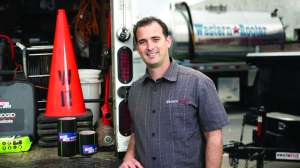
Randy Lorge is a third-generation plumber and the director of workforce training and development for the International Association of Plumbing and Mechanical Officials. Lorge is also a member of the planning team for the International Water, Sanitation and Hygiene Foundation. This 501(c) (3) foundation has completed water and sanitation projects for those less fortunate in India, South Africa, Indonesia and, more recently, the United States. He enjoys time with his family and spending as much time as possible in his deer stand. To contact Lorge, email editor@plumbermag.com.
Continue reading for free