When building science expert Steven Easley embarked on a project to showcase how wellness, sustainability and durability could all be optimized in new homes, he paid as much attention to the home’s plumbing system as he did to the advanced air filtration system.
Water quality sometimes doesn’t get the attention that air quality does in enabling healthy homes, but it plays just as big of a role. Ensuring the highest possible water quality for customers starts in the pipes. Of course, no piping material can improve water quality. Instead, the goal for builders and plumbers is to minimize the risks that some materials can introduce and ensure the water at fixtures is as safe as the water entering the main line. That means selecting materials that can minimize the risks of biofilm growth, leaching and permeation.
What’s growing in the pipes?
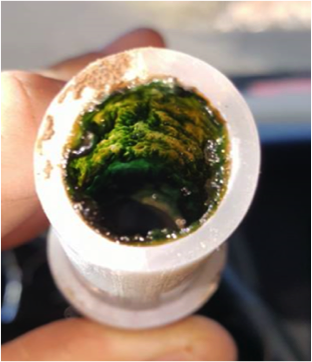
Not many homeowners would be comfortable drinking water from the pipe shown in Figure 1 (left). But that’s what the inside of some residential plumbing systems look like. The buildup inside the pipe is called biofilm, and it can be dangerous. Biofilm that forms inside residential plumbing systems can contain bacteria such as E. coli, coliforms and legionella. Legionella causes Legionnaires’ disease, a severe and potentially fatal form of pneumonia.
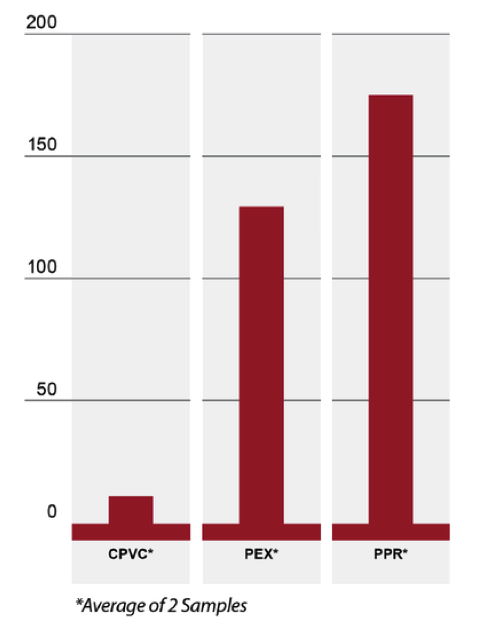
The susceptibility of a particular material to biofilm is called its biofilm formation potential, and it varies across plumbing materials. Independent researchers have studied the biofilm formation potential of copper, PEX and CPVC and found that PEX piping has a comparatively higher biofilm formation potential. Specifically, a controlled study conducted by Kiwa, a respected international testing and inspection institute, found the amount of legionella growing in PEX piping to be significantly higher than CPVC over the same period (Figure 2). Subsequent research has found that the biofilm formation potential of copper piping can increase as the pipe corrodes with age, making CPVC consistently among the lowest biofilm formation potential plumbing systems available.
Several plastic piping systems are at a disadvantage when it comes to dealing with biofilm, which is typically treated with chlorine. For example, PEX piping contains chlorine inhibitors to slow the rate of chlorine degradation. Those inhibitors will attack the chlorine being introduced to kill bacteria, making it ineffective and potentially contributing to the biofilm growth potential. However, with CPVC plumbing systems, chlorine degradation isn’t a concern thanks to its natural immunity to chlorine, resulting in overall healthier pipes. CPVC also features a smooth, hard microscopic surface that reduces the risk of biofilm adhesion.
Letting what’s outside in
In any piping system, it’s important to prevent the pipe from being exposed to chemicals that are incompatible with the piping material. CPVC and PEX piping have different chemical compositions, which makes them incompatible with different types of chemicals. For example, if you’re using FlowGuard Gold CPVC, you can reference the FBC System Compatible Program to quickly find out what materials are compatible and incompatible with this system.
Permeation is a specific type of chemical incompatibility that can present a risk to water quality by allowing dangerous chemicals that come in contact with the outside of the pipe to pass through the wall of the pipe and enter the water supply. The most common example of this risk is with pesticides or insecticides that may be sprayed in proximity to exposed pipes.
As with any compatibility issue, the key to permeation is the chemical composition of the piping material. The EPA, in a study on permeation and leaching, found that vinyls, such as CPVC, are virtually impermeable at low levels of exposure and at high levels of exposure would fail before allowing the water to become contaminated. That same study found that 82% of documented permeation incidents in the United States occurred in piping materials from the polyolefin family of plastics, which includes polyethylene, polybutylene, polypropylene, PERT and PEX.
As a result, plumbers using PEX should be particularly careful to follow manufacturer guidance on installation to minimize the risks of chemical permeation. One PEX manufacturer cautions not to install PEX piping in “environments contaminated with solvents, fuels, organic compounds, pesticides or other detrimental materials that may cause permeation, corrosion, degradation or structural failure of the piping.”
The problem is coming from inside the pipe
Sometimes, the pipes themselves can increase the risk of water contamination. This occurs when compounds from within the pipe are released into the water through a process called leaching. The industry standard for preventing unsafe health impacts from plumbing systems due to chemical leaching is NSF 61.
To protect against this risk, choose materials that are certified to NSF 61 under all water conditions. This is not the case for all materials on the market as some are not certified at elevated water temperatures.
There are also varying state-level regulations that pertain to leachates. Some piping materials, including PEX, are known to leach gasoline components MTBE, ETBE, TBA and Toluene. MTBE in particular is a problematic leachate because it is a highly regulated water contaminant in multiple states following groundwater contamination incidents resulting from its use in gasoline.
Making healthy choices
There’s obviously a lot to think about when considering the impact of piping on water quality, but it isn’t that complex from a practical perspective. Scientists at Virginia Tech studied the impact of a variety of piping materials on water quality, including epoxy-lined copper, HDPE, PEX and CPVC. The study found “the short-term ability of all pipe materials, except CPVC, to impact water quality and aesthetics.” The study also noted that “CPVC was the most inert of the materials tested and had the least impact on water quality.”
For many decades, plumbers have taken great pride in their role in “protecting the health of the nation,” but with changing water chemistries and evolving piping material choices, plumbers may have started to take this for granted. Fortunately, you have a healthy choice for cost-effective and easy-to-install piping systems that also help eliminate permeation risk, ensure water quality and build a healthier home. To learn more about how plumbing materials can influence water quality, visit FlowGuard Gold CPVC.
About the Author
Jonathan Simon is the senior sales enablement manager at the Lubrizol Corporation, which includes the FlowGuard Gold CPVC brand.
Continue reading for free