Installing a bathtub waste-and-overflow assembly is rarely as simple as the diagrams suggest. In the field, plumbers often work around structural obstacles, limited access, and tight timelines.
For contractors balancing productivity and quality, small efficiencies during installation can make a significant difference across a project. Planning, coordinating with other trades, and selecting solutions that adapt to real job-site conditions can streamline tub waste and overflow installations while reducing the risk of callbacks.
The challenge of limited space
Whether working in new construction or remodeling, plumbers consistently face one major obstacle: limited space.
In new construction, open framing may provide easier access. Still, structural elements such as floor joists, studs, and subfloor framing remain fixed constraints that often dictate where a drainline can realistically be routed.
Remodeling projects present additional challenges. Instead of working within an open wall cavity, installers may need to route a drain through a small access opening while avoiding the need to remove finished surfaces. Even with a solid plan, plumbers frequently find themselves maneuvering around obstacles while kneeling near a tub with limited reach.
Because of this, adaptability is often the difference between a smooth installation and a time-consuming workaround.
Coordinating early with other trades can help avoid installation challenges. If plumbers discuss plans with framing crews before the rough-in is complete, minor adjustments, like shifting a stud or joist, can simplify drain placement. This is particularly beneficial in larger residential or multifamily projects, where small time savings per installation can lead to significant labor savings overall.
Working around obstructions
Even with careful planning, installers frequently encounter situations in which the tub drain does not align perfectly with the trap arm or waste line.
Traditionally, plumbers address this by rolling fittings — using combinations of angled elbows to offset the pipe around joists or framing members. While effective, this approach adds fittings and additional installation steps.
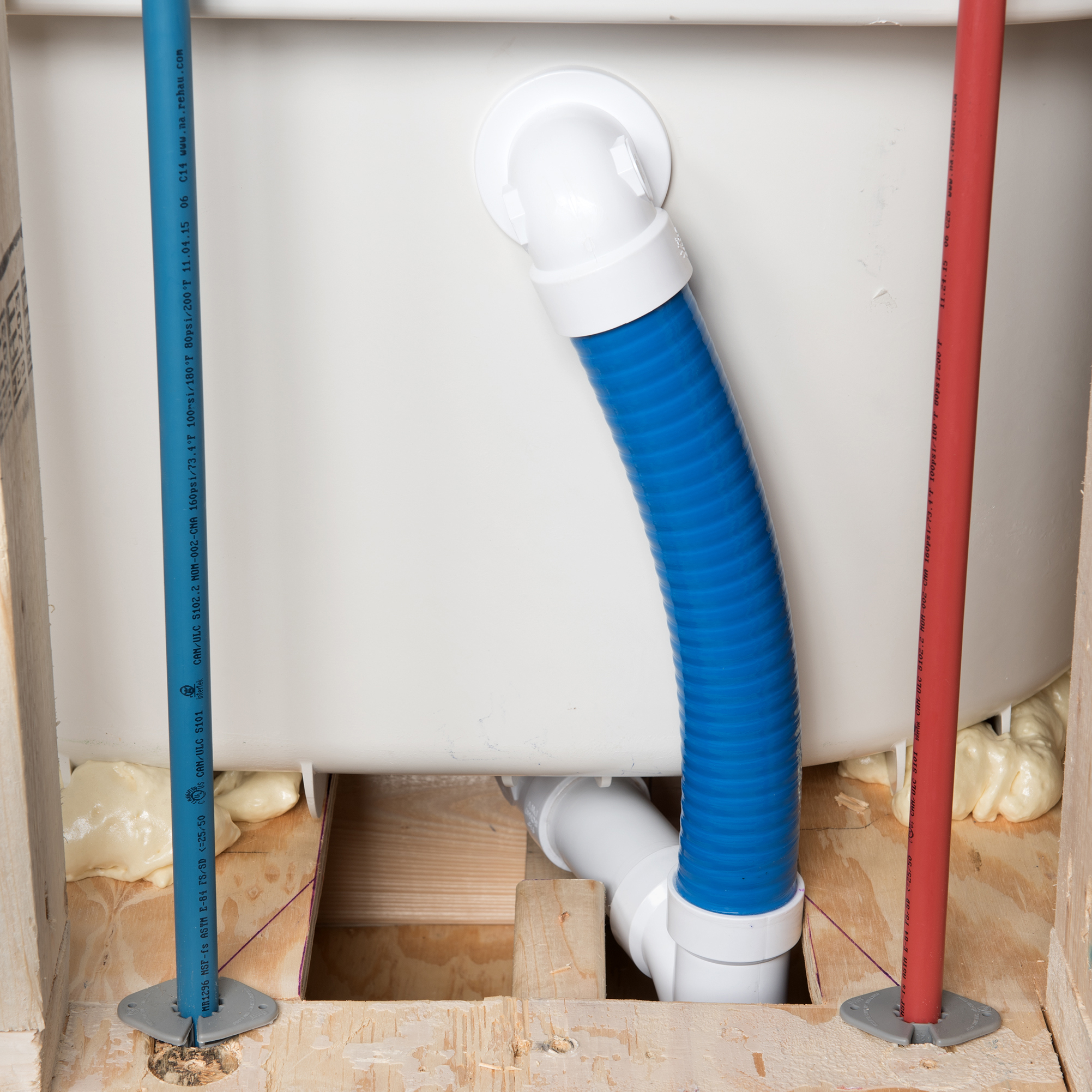
Flexible bath waste assemblies, such as Dearborn True Blue FLEX Bath Waste Full Kits, offer an alternative that many contractors are incorporating into their workflows. Flexible tubing can be adjusted to navigate joists, misaligned drains, or tight clearances without assembling multiple offset fittings.
For example, Nick Parlet, owner of Tidy Pipes Plumbing, regularly encounters alignment challenges in remodeling projects where existing framing and drain locations vary from one bathroom to another. Instead of building offsets with multiple fittings, he uses a flexible bath waste assembly to adjust alignment directly, reducing installation time while maintaining a clean connection to the trap.
“The flexible pipe allows me to easily navigate obstructions, such as floor joists, without additional fittings or solvent-welded joints,” he says.
Can flexible bath wastes be snaked?
A common question about flexible bath waste assemblies is whether they can withstand drain cleaning equipment.
In practice, True Blue FLEX is designed to handle typical drain maintenance procedures. The tubing is made of durable, flexible PVC that maintains structural integrity while allowing installers to work around job site obstacles.
When clearing a bathtub drain, plumbers usually insert the cable through the overflow opening. The snake quickly passes through the overflow elbow and into the trap below the tub. In most cases, the blockage is located further downstream — often past the P-trap in the branch line.
As a result, the cutting head of the drain snake typically reaches the blockage after it has already passed through the flexible section of the assembly. The flexible portion primarily serves as a short connector between the overflow and the drain shoe, rather than as a location where debris collects.
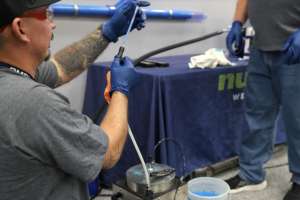
Field demonstrations have shown that drain snakes can pass through flexible bath waste assemblies without damaging the tubing or causing separation at the connections. When properly solvent-welded and allowed adequate cure time, the system performs similarly to rigid PVC during normal maintenance procedures.
Streamlining trim installation
Efficiency doesn’t stop at rough-in. The trim stage of a tub installation can also impact productivity.
Traditional overflow assemblies often include multiple screws and brackets that must be installed inside the tub. On busy job sites, these small parts can easily be dropped or misplaced.
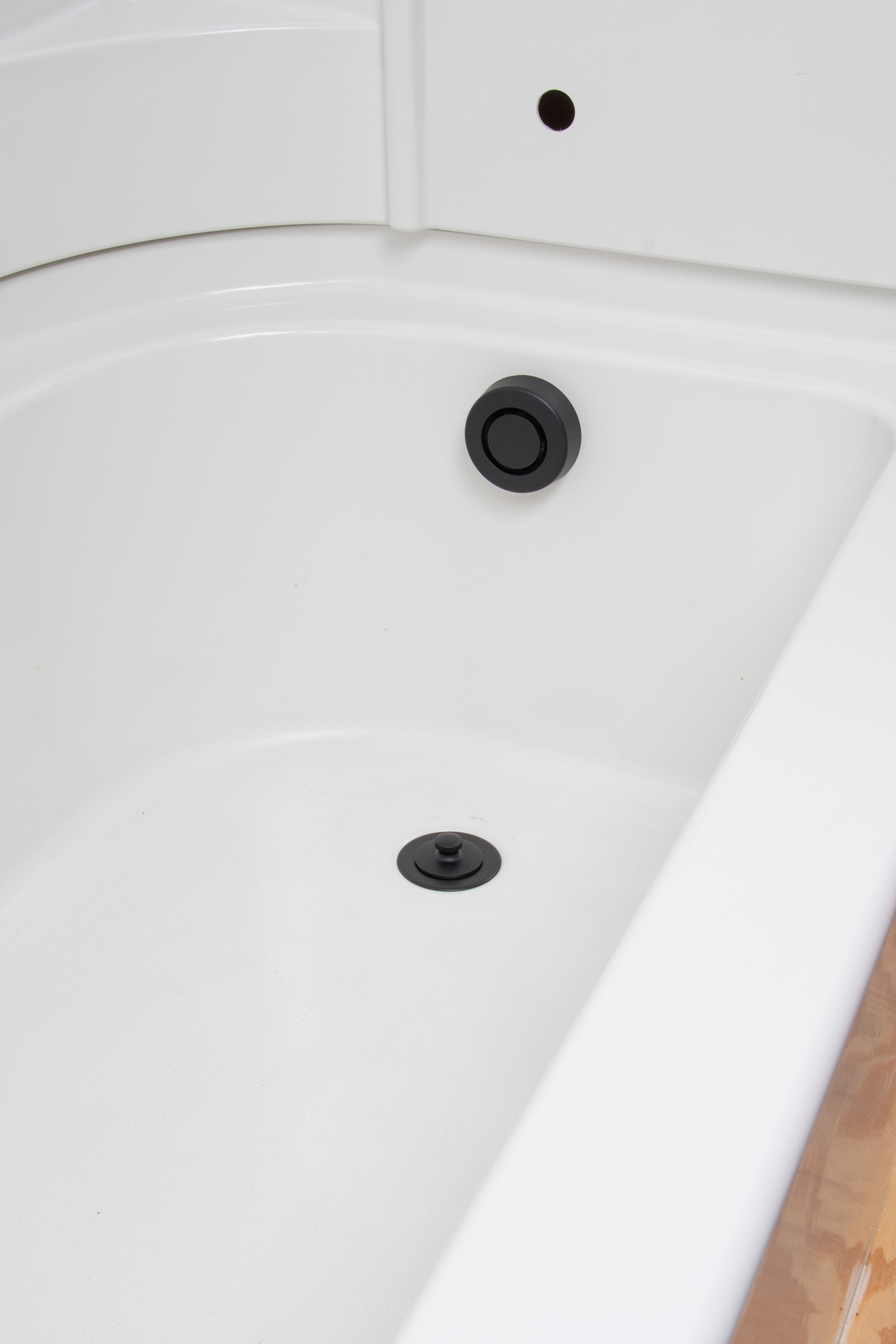
The modern trim design of Dearborn True Blue Bath Waste Kits simplifies installation. Tool-free overflow faceplates and press-fit trim components reduce installation time while minimizing the number of loose parts installers must manage during finishing work.
Available in a variety of stopper styles and sleek designer finishes, True Blue Trim Kits allow you to easily convert your trim to a different finish or stopper style without removing the rough-in components — an advantage when homeowners decide to change fixture finishes late in the project. The True Blue line is available in Matte Black, Chrome, White, Brushed Nickel, Oil Rubbed Bronze, Champagne Bronze, or Brushed Gold finishes.
Efficiency gains for large new construction developments
On large projects, such as multifamily developments, apartment buildings, or hotels, small time savings can add up quickly. Even saving a few minutes per tub installation multiplies across dozens of units.
Tank Phelps, purchasing manager for Robert A. Tull Inc. and a licensed journeyman plumber, says the company installs plumbing in up to 1,500 single-family dwellings and townhome units each year. That volume requires maximum productivity and efficient plumbing products.
According to Phelps, the True Blue Bath Waste Kits help installers overcome common frustrations, particularly with drain gaskets.
“The guys love the True Blue drain gasket because it stays put and doesn't fall off during installation,” Phelps says.
The kit includes an integrated locking bath shoe gasket that prevents movement during installation of the drain spud. Overflow and drain test plugs install with a simple quarter turn, making testing quick and reliable.
Phelps also points to improvements in the installation of overflow covers.
“Traditionally, the guys would have to attach the overflow (on the tub side) using screws and a brass yoke,” he says. “The True Blue overflow cover locks with a simple clockwise turn, so no additional tools or screws are required for installation.”
He adds that the system’s thick overflow gasket helps prevent leakage.
"I like that the True Blue Bath Waste has a round trim, because it eliminates the need for perfect alignment,” he says. “Some of the trims on other overflows have lines on them, and if they’re not lined up, it looks crooked.”
The gasket uses a foamed rubber material that provides better compression and memory than traditional gaskets.
Efficiency from rough-in to trim
For plumbers, efficient bathtub installations come down to preparation and adaptability.
A few practical strategies can help keep projects moving smoothly:
- Coordinate drain placement with framing crews during rough-in.
- Plan for obstacles, such as floor joists and misaligned drains.
- Use flexible assemblies when offsets become complex.
- Select trim components that simplify final installation.
By combining thoughtful planning with practical installation solutions, plumbers can complete tub waste and overflow installations more efficiently while delivering durable, professional results from rough-in through final trim.
About the author: Sean Comerford is manager of Inside Sales and Tech Support at Oatey Co. He is a third-generation tradesman with nearly 20 years of plumbing experience, including serving as the lead plumber for commercial/residential new-construction, service and fire protection jobs. He holds a State of Ohio Fire Protection License for Sprinkler and Standpipe.
Continue reading for free