Low-flow toilets seem like a great water conservation strategy, but are they turning out to be more troublesome than good?
The Beginning of the Issue
Older-model toilets rarely needed any repairs, almost never clogged, and had a powerful flush every time. That’s because those toilets had a toilet tank with 3.5 to 5 gallons of water rushing down. The toilets stayed clean because of the large volume of water scouring the bowl and the waste went flying down the line and made it all the way to the sewer main in the street. All this water from every house on your block was flushing the sewage to the treatment plants with no problem.
So what happened? Why do your customers “new” toilets always have issues? Why does every toilet have a plunger on stand-by at all times? Why does the sewer clog every once in a while? The answer starts with the federal government. In 1992, President George Bush signed the Energy Policy Act, which mandated that new toilets use 1.6 gpf (gallons per flush) as opposed to the old school 3.5 to 5 gpf. As a result, we were left with a pip squeak amount of water to flush our waste away.
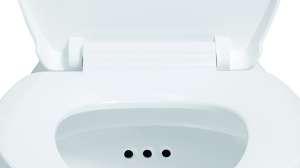
Old-fashioned toilets usually had 2-inch flappers with 2 1/8-inch trapways. The flapper size and the trapway were more than adequate because of the large volume of water in reserve. But now that the manufacturers were forced to decrease the volume of water, they made smaller tanks and generally speaking left everything else the same. Now you have 1.6 gallons of water going down a tiny 2-inch flapper and crawling down the internal 2 1/8-inch trapway. Not only are we seeing more clogged toilets, but we are also getting more backed up laterals and sewer mains.
The San Francisco Sewage Nightmare
San Francisco went big on pushing low-flow toilets and had a rough time because of them. In 2011, people attending Giants games at AT&T Park began to complain about the sewer stench around the stadium. After enough complaints around town about the same issue, the Public Utility Commission found that the stench was coming from the sewage system. The sewer system was not getting enough water, and therefore the waste was sludging up and causing a horrific smell. The sewer mains were sized by engineers for a different and larger amount of water volume originally, and the city now had to spend $100 million upgrading both mains and the sewage plant. They also decided to stock up on $14 million of bleach (a three-year supply) to disinfect and eliminate the odor.
Citizens saved tons of money on their water bills. Almost 20 million gallons of water a year were “saved.” You can begin to do the cost analysis until you run into a few variables. The biggest variable is how many times people have to flush the toilet for one use. Another variable is the embarrassment that comes with house guests clogging up your toilets, and most importantly the potential health risks involved in sludging mains. How do you put a price tag on water waste, personal embarrassment and waterborne disease outbreaks?
Are We Really Saving Water?
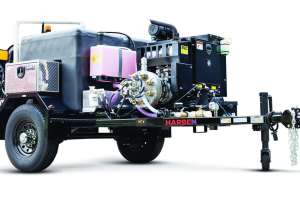
Since the mains are backing up more regularly, municipalities must think more about routine maintenance. They put streets on a regular schedule and routinely jet out the lines. The jetters can use up to 165 gpm, which comes with a price tag. The belief by some local governmental officials is that routine maintenance is not worth the taxpayers’ money, and they would rather dispatch sewer workers only for major clogs and emergencies. In many municipalities, this leads to dangerous and unnecessary emergencies and health concerns, especially during times of floods that could have been prevented.
On the other hand, look at low-flow toilets from a consumer point of view. One internet search on low-flow toilets will pull up hundreds of articles, publications, and consumer complaints about the effects of low-flow toilets. People are having to flush toilets two or three times instead of once. They have to keep plungers next to every toilet and are embarrassed when guests can’t get the toilet to flush the first time. There is even a black market for 3.5- to 5-gallon toilets, and Congressional hearings about low-flow toilets (Look up “Rand Paul Toilet Rant” on YouTube).
Even many environmentalists you find online are complaining saying, “I am all for water conservation but having to flush four times seems ridiculous.” Ideas are now starting to circulate for solutions, such as installing higher-volume fixtures farthest away from the laterals, automatic flush timers for timed extra flushing, and changing the type of toilet paper available to buy.
The usual line size coming out of everyone’s house is 4-inch. Many of the mains are 6-inch. This old-school system let the waste exit the house, make it all the way to the main, and then — collectively with the rest of the streets’ sewer laterals — scour the 6-inch main all the way to the treatment plant. No routine maintenance needed, no large jetter required. It was a giant step forward in the history of plumbing. As an old-timer once told me, “Look at it like you’re going on a trip in your car. If you are traveling 10 miles, and your car gets 10 mpg, and you only have 1 gallon of gas in the tank, you will make it. If you only have half a gallon of gas in the tank, you won’t.” It really is as simple as that. It takes X amount of water to push the waste X amount of feet.
We are all on the same page about being responsible and environmentally friendly, and doing what we can to help customers and businesses conserve water. But we are now dealing with millions of dollars to upgrade our mains and sewage plants, and spending millions of dollars on chemicals to reduce the smell of sludging mains. We have to use cheap toilet paper, flush three or four times for one sitting, buy plungers for every toilet, put up with the city sewer smell, run the risk of citywide health issues, use 165 gpm jetter trucks, and install high-flow fixtures to flush our lines on timers. Isn’t this a giant step back in the modern world of plumbing? Maybe it is time we give the low-flow thing a second look.
About the Author
Anthony Pacilla is a registered master plumber for McVehil Plumbing in Washington, Pennsylvania. He has 22 years of experience in the plumbing and HVAC trades, and has a bachelor’s in business and economics from Thiel College.
Continue reading for free