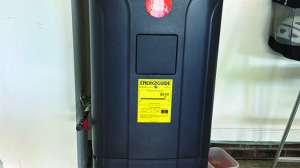
For me, one of the most fun things to do as a service plumber is replacing commercial water heaters — that is once you get used to the process. There’s more to think about when replacing some beast of a tank in a mechanical room or basement than swapping one out at a residential home.
Replacing a commercial water heater isn’t as straightforward as a residential unit. Especially when you compound the maintenance staff “repair guy” who has been dabbling in the building’s hot water system, the string of different plumbers who have replaced parts, patched repairs, swapped out pumps, rewired units, reduced sizes and installed mazes and puzzles of piping arrangements as if the creator was attempting to make you solve a riddle.
So you enter a commercial basement, and an office staffer takes you into the mechanical room, points to a giant beast of a tank and says, “There she is. Good luck!”
Now what?
The bigger the unit, the more fun it is to replace. It is probably cumbersome and caged in with piping. How do you get it out? Will it fit through the door? How do you get it up or downstairs safely? How do you get it down the hallway? What if it’s leaking rust everywhere even after you drain it?
Keep it simple
The simpler, the better. The safer, the better. Don’t overthink the piping arrangements. Look at the bigger picture of what is going on. Label the cold-water inlet, the hot-water outlet, the recirculating line, the electrical disconnect, the circuit breaker panel, the circuit breaker, the appliance gas shutoff valve, and the master gas shutoff valve in case the appliance valve doesn’t work.
Prepping for a shutdown
What needs to come out to remove the unit safely? Is there piping in the way that needs to be cut out? Can you isolate that section of piping to avoid a total building shutdown? If not, you need to notify the property manager that a building will have to be shut down because of the lack of isolation valves required to remove the unit. It’s not your fault that the previous installer didn’t pre-plan future service.
Many plumbers make a mistake by spending time, money and resources to try and perform a miracle on the fly to avoid a shutdown. This is neither practical nor sustainable. If something needs to be shut off, moved or relocated, it is what it is. Let the building manager figure out the shutdown details on their end. That’s their job. There’s no point in spending four hours trying to figure out how to lift the unit up and over a set of piping at the risk of hurting everyone involved just so the building manager doesn’t have to send out an email to the property’s occupants.
Get the gear on site
Bring in an assortment of wheels: dolly, battery-powered stair dollies, the wood-framed flat hardwood dollies, super-strong 360-degree hard-wheel machine dollies, Johnson bar dollies, etc.
Next, bring in pipes, straps, lifts, and jacks — automatic jacks, bottle jacks, scissor jacks, house jacks, whatever you have at your disposal. The steel piping can be used to roll a unit from one point to another, and the jacks can be used to tweak or push a unit into place.
Also, consider bringing a Bobcat, excavator, or forklift to the job site once the unit gets near the exit door.
Lastly, consider disassembling the unit or bringing in sandbags if the unit (such as larger commercial storage tanks) was built in place or installed before the doors were put in making it too tall to be removed. Sandbags are a great way to deaden a blow to the cement floor when slowly tipping over a tank. (Controlled fall; don’t just push and take off running.)
Find an exit route and verbalize a plan for your crew. Also, ask for any other ideas that may counter your plan. Someone will often bring up a great idea to include in the plan, which also helps build leadership capital.
If your shop doesn’t own a Johnson bar, you need to get one. It is the most effective tool for moving heavy stuff in a controlled manner. The trade term is Johnson bar, but you’ll also find it under “steel pry bar lever” if you look it up online.
A final thought
Measure things up to make sure they will fit under and through the door opening, have a plan for disposal once it gets outside, and have a well-thought-out exit and entry plan. This will make these jobs a pleasurable experience.
Time on the job is secondary when moving around large tanks. Safety should be your top priority.

About the Author
Anthony Pacilla is a registered master plumber for McVehil Plumbing in Washington, Pennsylvania. He has over two decades of experience in the plumbing and HVAC trades, and has a bachelor’s in business and economics from Thiel College.
Continue reading for free