When you are working under pressure to get plumbing systems roughed in on time and up to code, small details can make all the difference.
Pipe supports might not be the flashiest part of the job, but they’re essential for creating a solid system that performs reliably for the long haul. The right support can save time, reduce callbacks, and even make the finished job look more professional.
In commercial settings especially, job site conditions are often inconsistent — steel studs here, wood framing there, and sometimes challenging access. Choosing supports that adapt quickly and install easily can improve your workflow, minimize waste, and allow you to focus on what matters most: doing the job right.
Here are five types of pipe supports that offer smart alternatives to traditional methods, helping you work faster, cleaner, and with fewer complications.
Sliding wall bracket
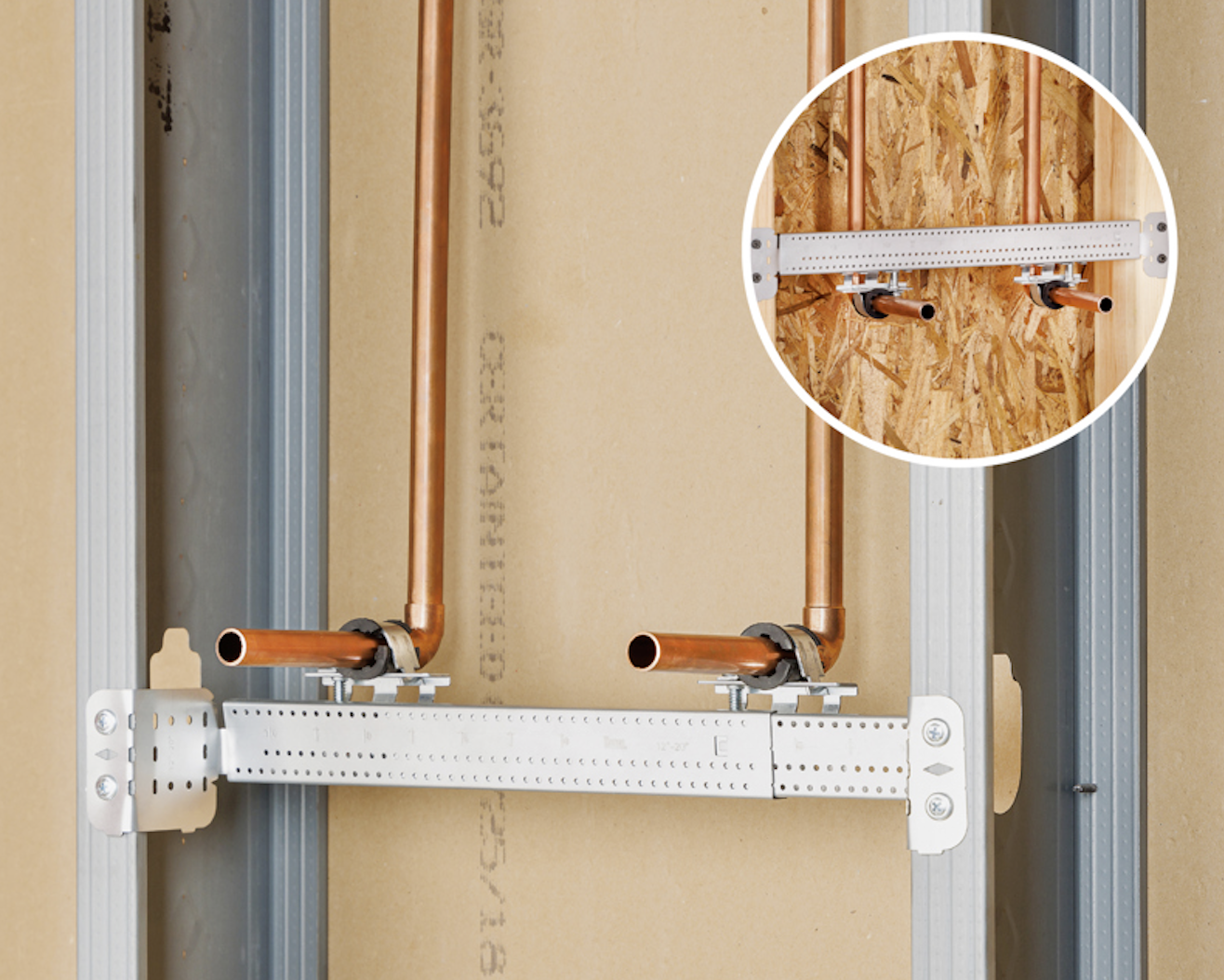
Stub-outs typically involve measuring and cutting pipe, then anchoring it to whatever blocking or studs are available. Depending on framing consistency, this can be tedious and time-consuming.
A sliding wall bracket makes what you are already doing quicker. The telescoping design adjusts to various stud widths, and thumb screws let you lock stub-outs in place without extra tools. It’s also lightweight, making it easier to manage when installing overhead or at scale.
For projects with repeated stub-outs — apartment buildings, hotels, student housing — it helps standardize the installation and keep things moving without much extra effort. By reducing the need for custom cutting or measuring on every stub-out, you can move from one unit to the next more quickly and reduce the chance of measurement-related errors.
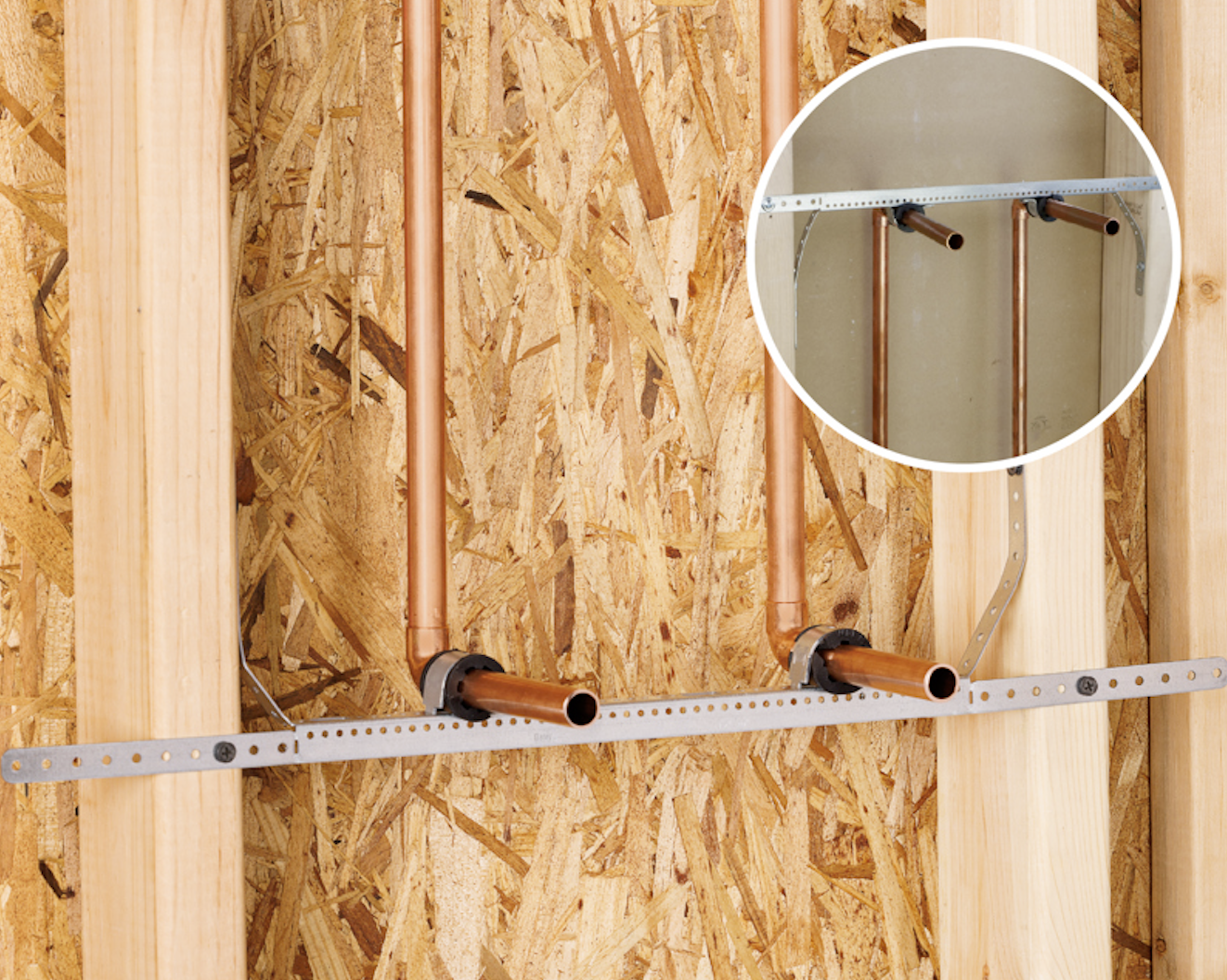
Light angled wall bracket stub-out kits
While the sliding wall bracket offers a straightforward way to deal with standard stub-out spacing, angled layouts bring a different challenge, especially in retrofits or tighter spaces where standard brackets don’t quite line up. That’s where a light angled wall bracket offers another helpful option. Its bendable mounting tabs and accessory slots make it easy to adjust on site without resorting to custom fabrication or improvised mounting.
Unlike traditional patchwork fixes, this type of bracket adapts to various framing styles and lets you decide how to mount it — direct to the stud or paired with a clamp. Its lightweight construction is a plus when working overhead or repeating the same install across multiple units.
For irregular layouts, remodels, or jobs that require a bit more flexibility without slowing down the pace, this bracket provides a reliable way to keep things aligned and moving efficiently.
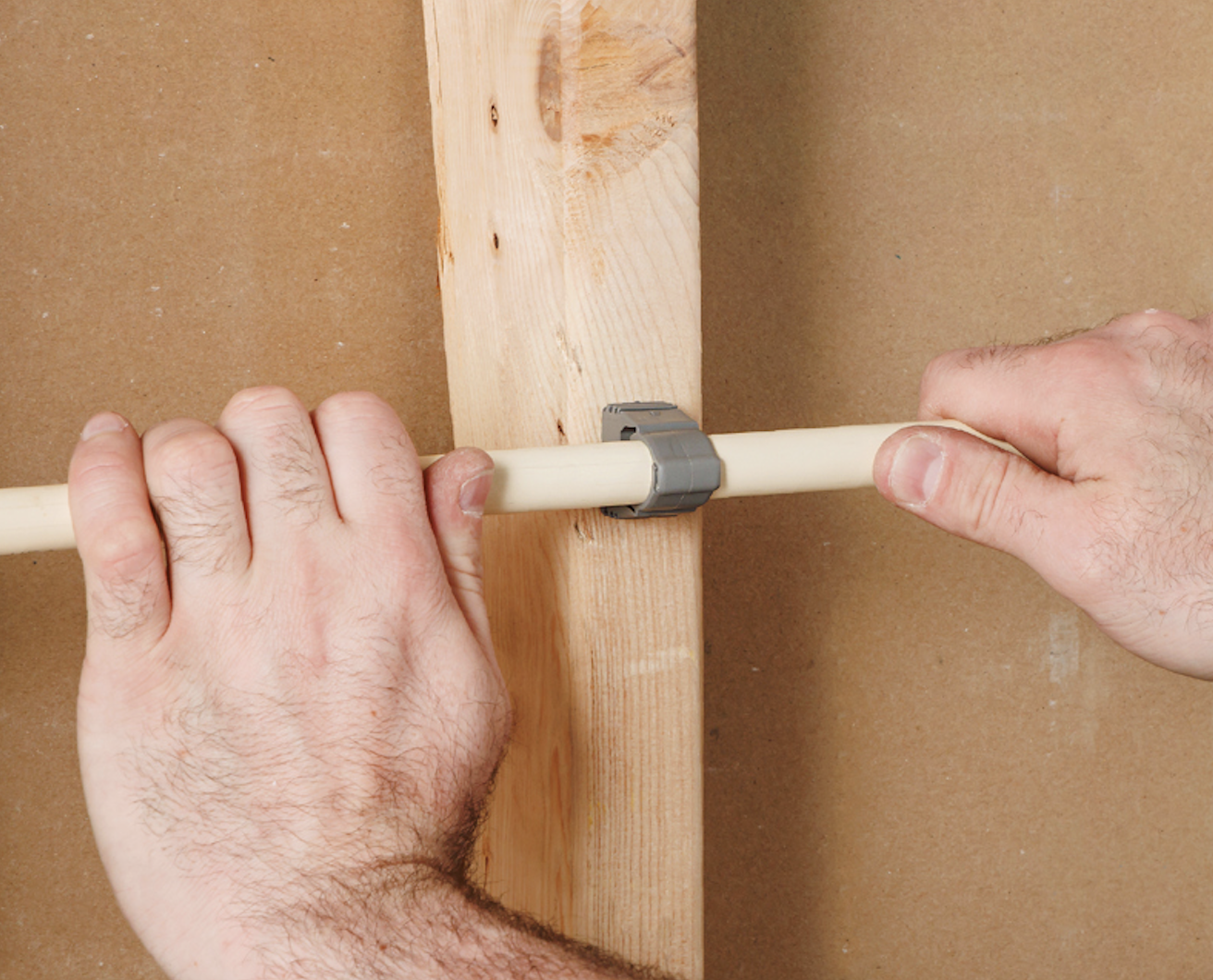
Self-closing pipe clamps
Standard clamps do the job but often require two hands when positioning pipe or fastening overhead. This method works, but it’s not always the most efficient. Self-closing pipe clamps eliminate some of the juggling. You can snap one over the pipe with only one hand, holding it in place until you can secure it properly. The interlocking design can be handy when running parallel lines in mechanical rooms or utility chases.
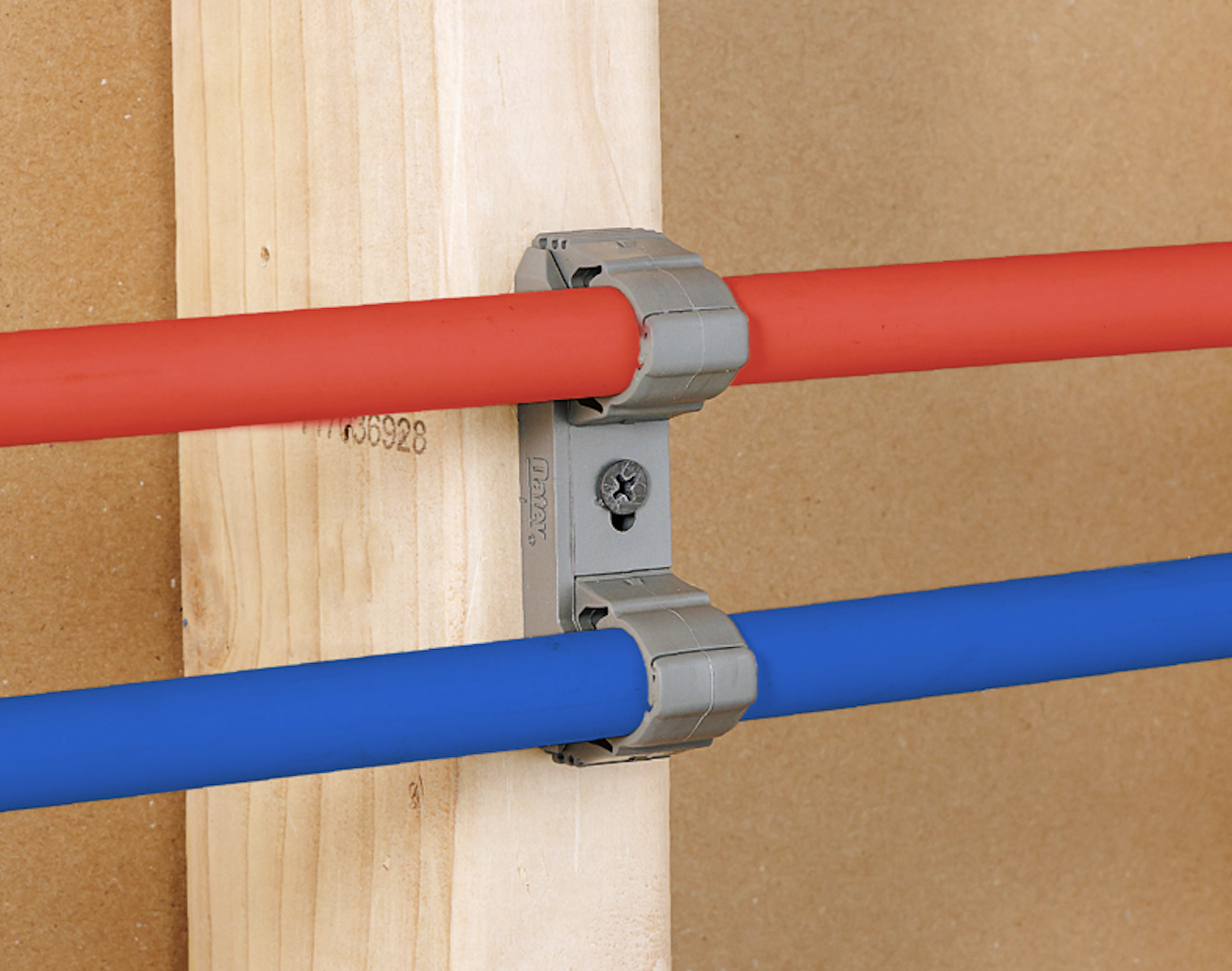
A dual wall bracket version adds more stability when installing grouped pipes, helping with alignment and overall neatness. On the job site, these features can cut installation time, reduce the risk of misaligned pipes during installation, and help one installer accomplish what might otherwise require two tradespeople.

Cushion pipe clamps
Noise and vibration are common challenges in buildings with active equipment or shared plumbing walls. Sometimes the fix involves improvised padding or upgraded hardware, which can get the job done but often adds time and extra materials.
Cushion pipe clamps offer a more straightforward alternative. They have a built-in elastomer lining that helps minimize movement and reduce sound at the source.
The one-piece design keeps installation simple, with fewer parts to handle. Multiple size options make them a good fit for prefab setups.
These clamps are also plenum-rated, so they meet code for installations in air handling spaces. Made from durable steel with a high-grade zinc-magnesium coating, they stand up well in tougher environments. This small adjustment can help streamline installs without adding complexity.
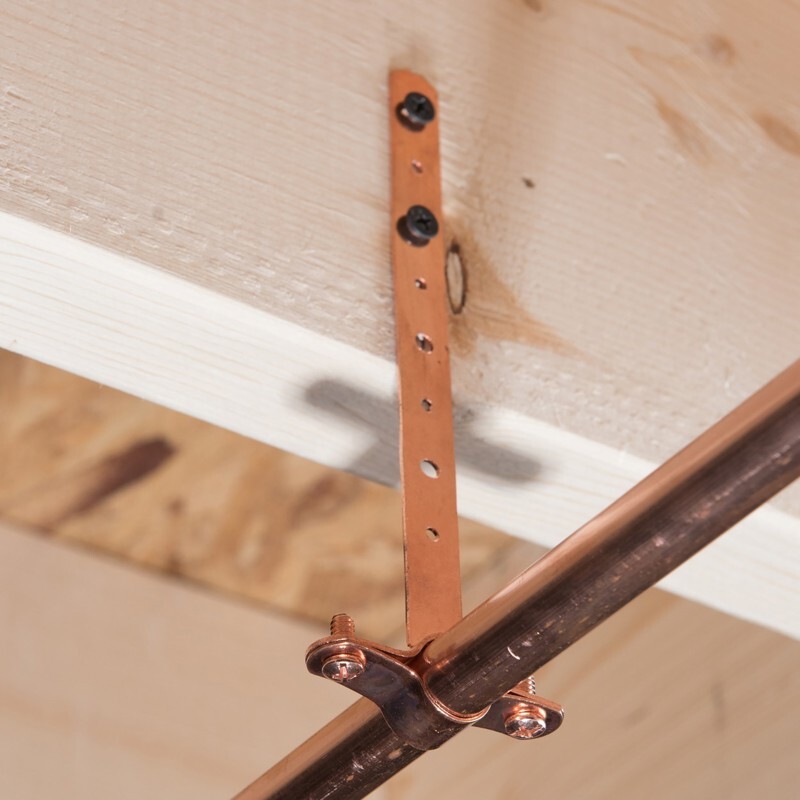
Copper-plated milford hangers
Supporting copper with standard steel hangers usually requires adding a buffer — tape, sleeve, or other protection — to avoid electrolysis. Copper-plated hangers offer a built-in solution to galvanic corrosion, so there’s one less step. They’re still steel and still strong, but the plating makes them compatible with copper systems. They offer a cleaner look and reduce long-term risk without changing how you install, especially on exposed runs.
Small adjustments, big gains
These pipe supports don’t change the fundamentals of how you support pipe, and that’s exactly what makes them so valuable. They’re familiar, easy to integrate into your usual workflow, and offer small efficiencies that can really add up on the job.
When you’re dealing with a large-scale install, especially on a tight timeline, little things like faster placement, easier alignment, or built-in versatility mean less time stopping to make adjustments and more time moving forward.
For many plumbers, using the same go-to supports across a job helps with consistency, but enhanced options can bring even more structure to your process. Supports that accommodate multiple configurations or simplify prefab work can streamline your setup, reduce rework, and support a more organized job site.
Whether you’re roughing in one unit or a hundred, having flexible, job-site-ready solutions helps you stay efficient without needing to rethink your whole approach.
About the author: Jim Eichenser is an inside sales and tech support specialist at Oatey Co. and has decades of plumbing installation and service experience.
Continue reading for free