No piping material can improve water quality — that’s the job of water treatment professionals. But different materials have characteristics that can make them more or less vulnerable to water quality issues and how those issues are managed.
Why pipe material matters for water quality
One of the most serious water quality issues today is the threat of legionella, a type of bacteria that can cause serious lung infections.
Legionella bacteria can grow inside pipes when a layer of microorganisms create a “biofilm” that supports legionella growth. Biofilm develops slowly over time and can form a complete film coating the pipe interior or exist as small patches on the pipe’s inner surface.
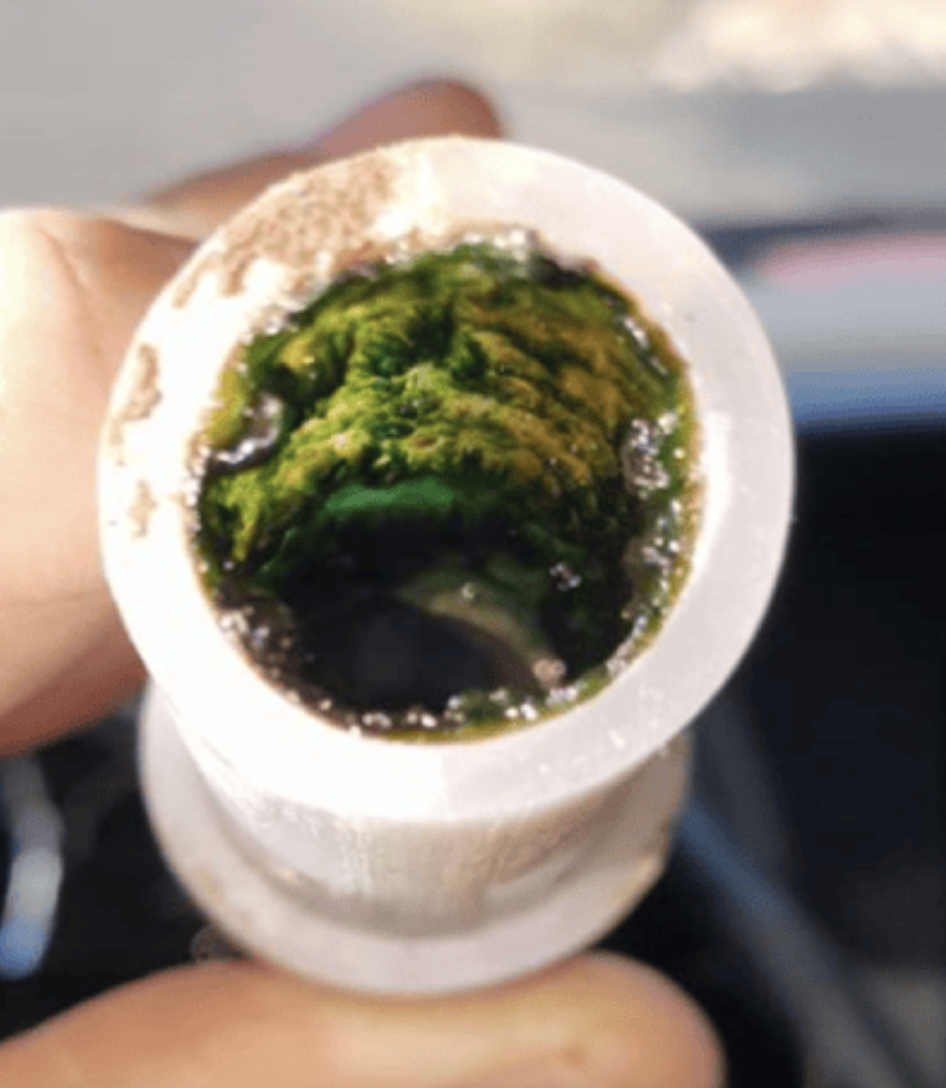
The rougher the surface area of the pipe’s inner wall, the easier it is for biofilm to form. As a result, biofilm formation potential—the likelihood of a surface to develop biofilm growth—is largely dependent on the inner surface of the pipe.
With copper, new pipes have a smooth inner surface and thus a low biofilm formation potential. But as the pipe ages, the inner wall becomes rougher from corrosion and the biofilm formation potential increases.
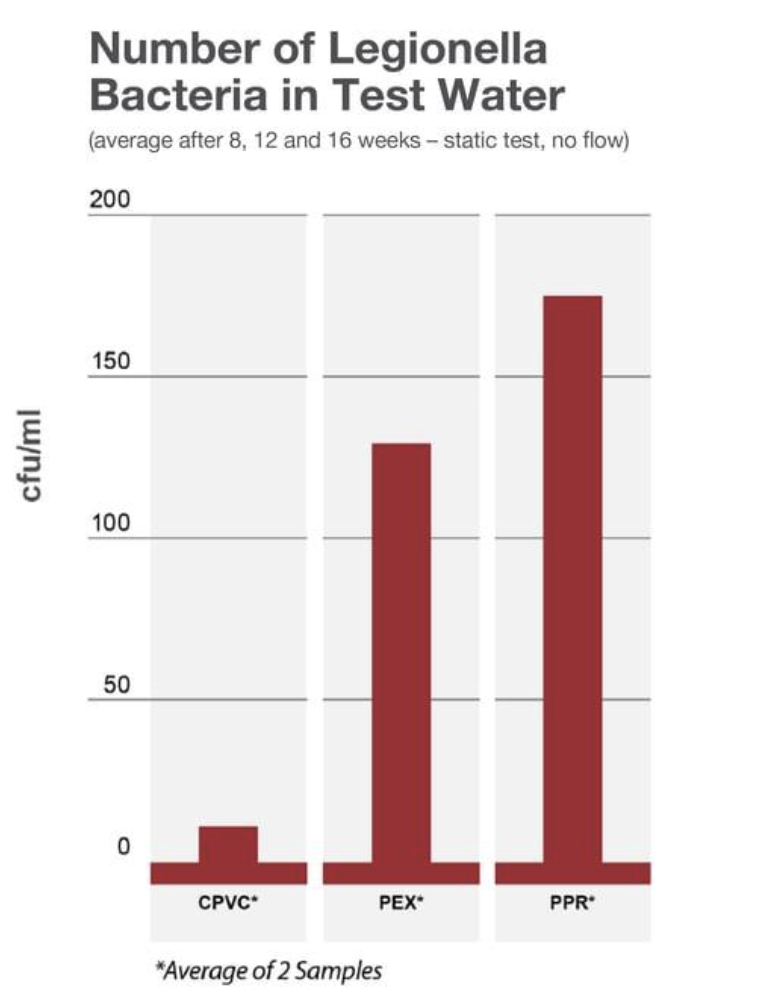
With plastic pipes like PEX, PP-R and CPVC, biofilm formation potential is more a function of the material’s microscopic surface characteristics than age. A controlled study conducted by Kiwa, a respected international testing and inspection institute in The Netherlands, found that several times more legionella developed in PEX and PP-R piping compared to CPVC over the same time period (Figure 2).
Piping materials and legionella mitigation
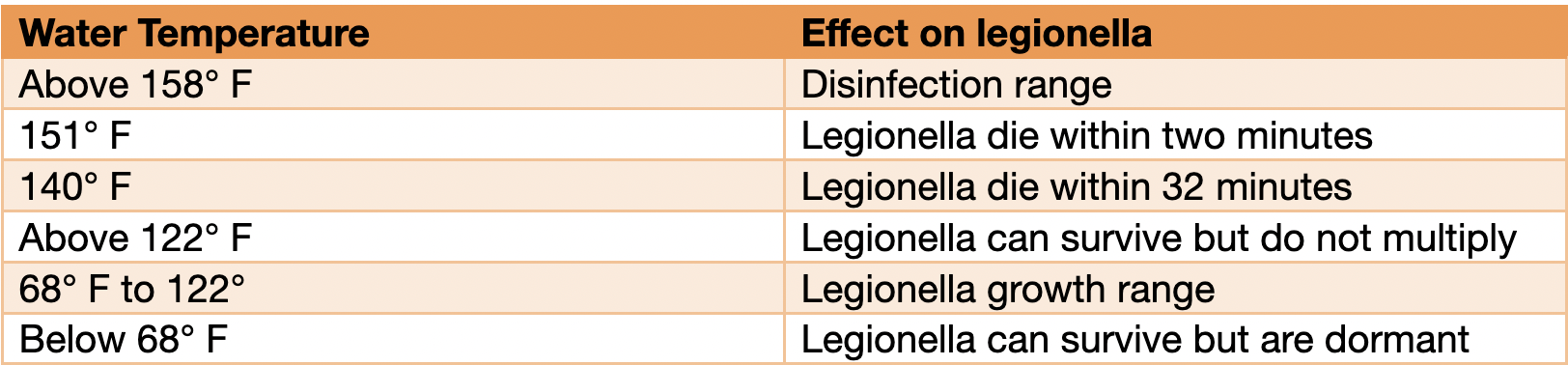
Legionella bacteria grow in temperatures from 68 to 122 degrees F and will die in temperatures above 140 degrees F (Figure 3). As a result, some buildings with vulnerable residents or where water is more likely to sit stagnant may periodically flush the system with water above 140 degrees F to prevent legionella growth. If legionella is detected, ASHRAE 188-2018 requires corrective actions that may include flushing the system with water above 140 degrees F and/or shock chlorination.
These measures, while necessary, can have harmful effects on some piping systems. PEX, for example, has been documented to be vulnerable to faster degradation and reduced service life under conditions that include those created by legionella mitigation—temperatures above 140 degrees F and water with an oxidative reduction potential above 825 mv.
Chlorine dioxide, which is also used for legionella mitigation, can create issues for copper and PEX pipes. The Plastics Pipe Institute has published a paper that concludes that chlorine dioxide has the potential to reduce the service life of most plumbing materials, including copper, steel, PEX, PE-RT, and PP-R. The one exception noted in the paper is CPVC: “chlorine dioxide is not known to be aggressive to CPVC at elevated temperatures of 200 degrees F and below.”
Due to its chemical composition, CPVC is inherently immune to corrosion or degradation from water treated with chlorine, chloramines and chlorine dioxide. That immunity means CPVC pipes do not have to be de-rated to protect them from chlorine degradation. Both copper-tube-size SDR 11 and IPS Schedule 80 CPVC pipes and fittings are available with temperature ratings of 180 degrees F at 100 psi with no limitations for hot chlorinated water.
Not only is CPVC less susceptible to biofilm formation, the material can effectively withstand the conditions required to kill legionella.
Ensuring system integrity
Legionella mitigation is particularly important in facilities with a high percentage of at-risk residents, such as senior living centers, or those where water is more likely to sit stagnant for extended periods, such as hotels.
These facilities typically use both IPS Schedule 80 and copper-tube-size SDR 11 piping. Some contractors prefer to mix materials on these projects, using, for example, copper for main lines and CPVC for distribution to fixtures or CPVC for mains and PEX for distribution. However, this can introduce unnecessary risks into the system.
When materials with a higher biofilm formation potential are used for the mains, the bacterial colonies that form in those pipes are carried downstream, increasing the potential for biofilm formation in smaller-diameter pipes. Then, when it becomes necessary to treat for legionella, the most effective treatments are likely to damage materials that are vulnerable to chlorine degradation and/or will have their service life reduced by exposure to chlorine dioxide disinfection.
IPS Schedule 80 and copper-tube-size SDR CPVC work together to provide consistently low biofilm formation potential across the entire system while enabling proactive and aggressive mitigation. These systems also benefit from having a single material throughout, with similar performance and design principles across all pipe sizes.
For information on copper-tube-size SDR 11 CPVC, visit FlowGuardGold.com. For information on IPS Schedule 80 CPVC, visit Corzan.com. To view the full findings from PPI, visit their recently released Technical Note 67.
Gabe Ellis is the North America business development manager at The Lubrizol Corporation.
Continue reading for free