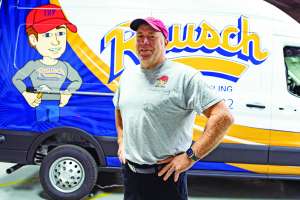
“We’re actually ranked No. 1 in the state for the percentage of high-quality reviews for plumbing,” says Rausch, 57, who established his company in 1996. “And we don’t even solicit online reviews. I thought about doing that, but I decided I’d rather have them come organically.
“I attribute the high ratings to how we answer the phones and how we perform our services,” he continues. “And that our prices are reasonable.”
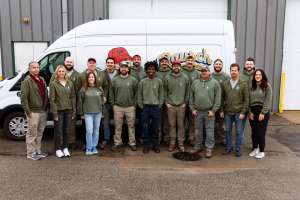
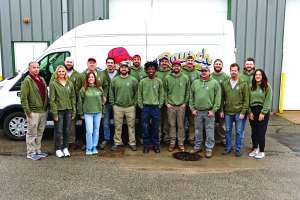
Rausch also credits his employees, whom he says are the primary reason for the company’s success. Moreover, he also points to an unconventional marketing strategy that plays big dividends: answering questions texted to him by customers. He also eventually realized that he needed to surround himself with professional specialists that would allow him more time to focus on business operations.
In short, Rausch has created a business that greatly exceeded his expectations.
“At first, I just wanted to earn enough money to replace what I was making at my last job, which was about $50,000 a year,” Rausch says as he looks back at his humble beginnings. “For the first 10 years, that’s what I paid myself — I invested everything else back into the company.
“During our first year in business, our sales were about $200,000,” he adds. “And this year [2024], we’re on track to hit around $4.3 million.”
ACCIDENTAL CAREER
As Rausch puts it, plumbing chose him, not vice versa. After graduating from high school with no career in mind, a friend’s father, who worked in construction, told a plumber he’d hired about Rausch. The plumber then offered Rausch a job.
“I like to say that I fell into plumbing — and it was a perfect fall,” he quips. “I originally was going to join the military. I never enjoyed studying, so college wasn’t on my radar at all.
“I liked working with my hands, but at the time, no one really talked about the trades because they got so beat up by the recession.”
Rausch nonetheless accepted the job offer from Paul Coonen Plumbing in Greenville. About two years after becoming an apprentice, he left to work for Salm Plumbing in Appleton.
“The training at Coonen Plumbing was excellent because it was all one-on-one,” Rausch says. “And working for my friend Lenny Salm was great because they did everything from septic system installations to commercial work to residential plumbing. That really rounded out my plumbing experience. And I also learned that I really liked residential new-construction plumbing.”
LEARNING CURVE
Four years later, Rausch struck out on his own, emboldened by a regional construction boom.
“I let builders I’d worked with in the past know that I was on my own,” he says. “I also introduced myself to one of the biggest residential home builders in the area. He gave me a few jobs to work on and I’ve now been working for them for 28 years; almost 50% of our residential work comes from them.”
After several years, Rausch recognized something that many tradesmen-turned-businessmen also realize: While he was good at his craft, he lacked fundamental business knowledge. That led him to hire specialists that took the business to the next level.
“I realized I should’ve taken some business classes,” Rausch says. “As I added more employees and saw more and more business opportunities, I recognized that running the business was not just about turning wrenches. It was a steep learning curve, but by around year 10, I was surrounding myself with people who really knew their crafts.
“I saw that if I hired someone who knew more than me in a certain area, that would allow me to delegate things and free up time to focus on the overall business,” he adds. “I really like being out in the field and didn’t want to lose out on training guys, as well as ensure that jobs are done the way I want them done. Customers love to see the company owner on site, too.”
Those hires included Kelly Dietrich, a bookkeeper and is now director of human resources; Greg Jochman, an expediter (and a licensed plumber) who organizes jobs, orders materials and coordinates projects with builders and customers; and Aaron Zenner, a journeyman plumber who leads a construction crew and often works side by side with Rausch.
BUILDING A DIVERSIFIED BUSINESS
After about 10 years, Rausch hired a service plumber to tap into new business opportunities.
“We were getting a lot of calls for service and had to turn them down,” he explains. “So I eventually brought in another office person to field phone calls and hired a service plumber.”
Today, about 50% of the company’s revenue stems from service and repair plumbing. Plumbing new residential and commercial buildings contributes another 36% and remodeling chips in the remaining 14%, Rausch says.
Around 2018, the company entered the remodeling market, which prompted Rausch to hire another key employee, Doug Crusan, a builder who was getting close to retirement, but still wanted to work — just not outdoors in the elements, he says.
After Rausch began to understand the nuts and bolts of running a business, he started buying things in bulk to reduce expenses and boost profit margins.
“We weren’t making much on money in the bank, so I instead invested in inventory,” he explains. “For example, I would save a tremendous amount of money by buying a semi-trailer load of water heaters, especially as we kept hiring people and started going through inventory faster and faster.”
SHREWD MARKETING MOVE
An outside-the-box customer-service strategy also drove growth: Answering texts from do-it-yourselfers with plumbing questions, both customers and noncustomers. Rausch started doing this during the pandemic to help people who were having problems on small plumbing projects without having to enter their homes.
“It worked out so nice that we kept offering it,” he says.
The company uses a secure platform called Text TIM (Trusted Instant Messaging) and the phone number is easily visible on the home page of the company’s website.
Rausch says he receives about 50 texts a week, with most of them coming in on weekends. While doing this is time-consuming, it pays big marketing dividends, he notes.
“Those people do a lot of promoting for us — we get a lot of word-of-mouth business that way,” Rausch says. “We land a lot of service calls on those texts from people who get stuck on plumbing projects, just for being available. Just getting someone to respond these days is a big thing for customers.
“Getting into their phone is key,” he continues. “Once I’m in their contacts list, it’s almost a 100% guarantee they’re going to call me if they ever need something. Half the time they don’t even know my name — they just put me in as ‘plumber.’”
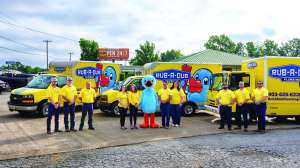
The company also relies on a website and trucks with vinyl wraps to enhance brand recognition.
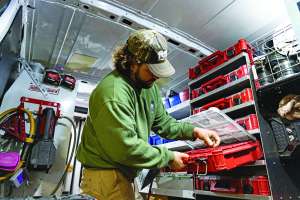
To serve customers, the business relies on five Ford Transit 350s, which Rausch says are spacious and tall enough that technicians can walk into them instead of stooping over. It also owns a Ford F-350 pickup truck and a portable dump box from Monroe Truck Equipment.
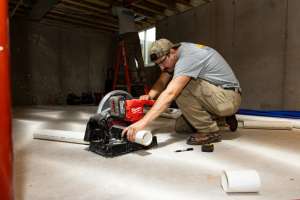
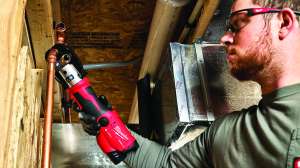
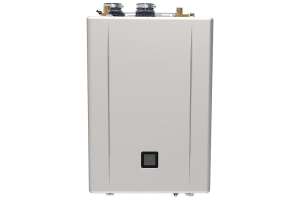
The company also has invested in small RIDGID drum cable machines and a camera and locator from Milwaukee Tool, as well as Milwaukee power tools. Rausch says he prefers water heaters from Rheem Manufacturing Co., Rinnai tankless water heaters and plumbing fixtures from Kohler and Delta.
The company also uses Verizon fleet-tracking software.
BETTER, NOT BIGGER
Looking ahead, Rausch says he doesn’t see dramatic growth, though he does see potential for adding drain cleaning to the company’s roster of services for the simple reason that customers keep asking for it.
“I’m content where we’re at,” he notes. “It’s said that if you’re not growing, you’re dying, but I don’t buy into that. I’d rather stay the same size and focus on improving our services.”
Rausch also is eyeing an eventual passing of the reins to his two sons, Eric and Tim Jr., who work as service plumbers.
“There’s nothing definite yet in terms of a succession plan, but we’re working on it,” Rausch says. “I want to plumb forever, so I’m hoping they’ll let me hang around the shop for as long as I’m useful.”
Looking back, Rausch says he feels very fortunate to have fallen into such a great career.
“I love the satisfaction of going into a home and by the time you leave, everything is up and running,” he says when asked what he likes most about plumbing. “When you stop and think about it, plumbing is what helps us avoid being a third-world country.
“Good plumbing keeps us healthy by separating water from waste and keeping water healthy with proper practices,” he adds. “It’s a very satisfying and gratifying job.”